Planning a European Rail Trip Across Borders With Tickets and Mobile Data
Plan a cross-border European rail trip with clear advice on digital tickets, reservations, live departures, connections, and mobile data.
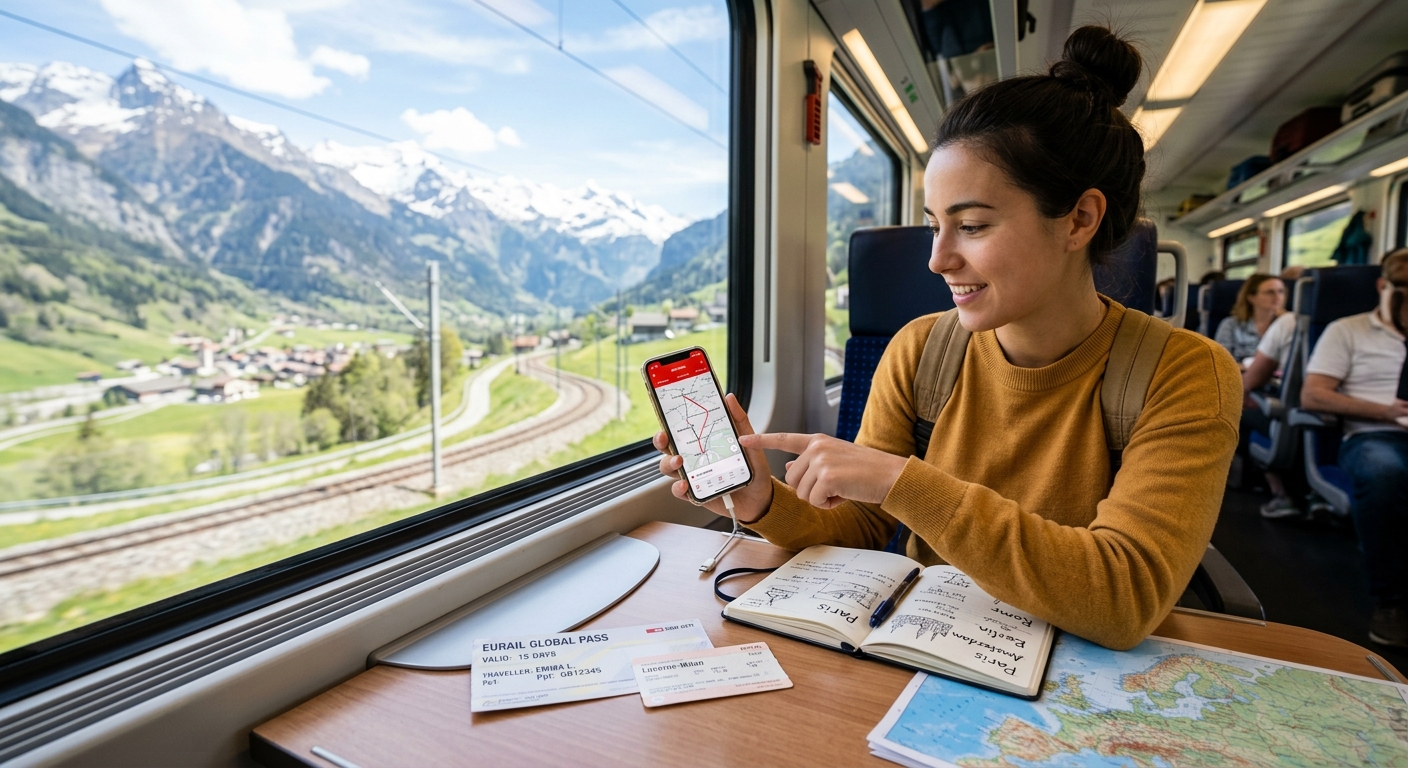
Your train is arriving late, the next departure has changed platforms, and your ticket is buried in an email that will not load. These are small problems until they happen together. A multi-country rail trip feels much easier when your tickets, connection details, and mobile data are ready before you reach the station.
The aim is simple: know what lets you board, where to find current departure information, and what you can still access without a signal. Whether you travel with individual tickets or an Interrail or Eurail pass, a little preparation keeps each border crossing from becoming another round of phone troubleshooting.
Your Cross-Border Travel Essentials
- Check ticket validity and reservation requirements for every train.
- Keep accepted tickets and key journey details available offline.
- Use live operator information and station displays before boarding.
- Allow extra connection time for large stations and separate bookings.
- Check mobile coverage, roaming charges, and data allowances country by country.
Build Your Itinerary Around Actual Train Services
Start with a journey outline that records each departure station, arrival station, date, and train number. City names alone are not enough. A connection within Paris can involve changing stations. A booking for one Brussels station should not be treated as permission to board anywhere in the city.
Consider a route through London, Brussels, Cologne, and Vienna. It combines different operators, ticket systems, and boarding procedures. Treat it as several journeys with their own requirements. Check that every service runs on your chosen date before committing to accommodation or onward travel.
Save the station names exactly as they appear on your tickets. Add the scheduled arrival and departure times for each connection. Note whether you stay inside one station or need local transport between terminals. Those details matter more on a delayed journey than a polished itinerary map.
Timetables can change because of engineering work or service disruption. Recheck your route before departure, then check again on the travel day. A booking confirmation records what you bought. It does not replace current operating information.
Separate Your Ticket From Your Seat Reservation
A ticket establishes your right to travel under its conditions. A reservation assigns a seat or accommodation on a particular service. Sometimes both appear in one document. Sometimes you need separate documents. Having a seat number does not automatically mean you have paid for the underlying journey.
For individual tickets, read the fare conditions before buying. Check whether the ticket is tied to a specific train, whether changes are allowed, and whether a reservation is included. A cheaper fare can work perfectly for a fixed itinerary. It needs more thought when an earlier, separately booked train could arrive late.
With an Interrail or Eurail pass, check both pass coverage and reservation requirements. Adding a train to your itinerary does not reserve a seat. Eurostar’s official guidance confirms that passholders must book a seat and pay a reservation fee. Check passholder reservations before relying on a departure for a cross-border connection.
Night trains need another check. Decide whether you want a seat, couchette, or sleeper berth, then confirm exactly what your booking includes. ÖBB’s guidance explains that Interrail travel on Nightjet requires an additional reservation. Read night train requirements before treating your pass as a complete overnight booking.
For any mobile pass, follow its activation and journey-recording instructions. Keep the valid pass ticket available for inspection alongside any required reservation. Do not assume that a screenshot substitutes for an active ticket in the pass app.
Make Your Digital Tickets Easy to Find
Organise tickets by travel date and route. A filename such as “14 November Brussels to Cologne” is easier to recognise under pressure than an unexplained booking reference. Keep reservations beside the matching ticket, particularly when different sellers issue them.
Check the delivery instructions for every purchase. You might receive an accepted PDF, an app ticket, or instructions to collect a ticket before travelling. An order confirmation is not always a travel document. Open the actual ticket and confirm that it contains the information needed for boarding or inspection.
Download accepted PDF tickets to your device rather than leaving them as email attachments. Open app tickets while connected, then test what remains accessible in airplane mode. Use the issuer’s accepted format. Screenshots can help preserve journey details, but some ticket systems require the original app ticket or a changing barcode.
Keep these items together in your offline travel folder:
- Accepted ticket files and separate reservation documents.
- Train numbers, dates, station names, and scheduled connection times.
- Booking references and the seller’s support details.
- Station maps and directions for any transfer between stations.
- Accommodation addresses and one workable onward travel alternative.
Carry any identity document or discount card required by your fare. Check that passenger names are correct before departure. A well-organised phone cannot fix a ticket issued for the wrong person.
Check Mobile Data Across the Whole Route
Mobile data earns its place when a delay changes your plans. It lets you check departures, retrieve booking messages, and find directions outside the station. Start by writing down every country you will enter, including countries crossed in transit.
Ask your current provider which destinations your plan covers. Check the roaming allowance, any fair-use limits, and charges outside the included area. Do not assume that a plan described as European covers every country on your itinerary. The United Kingdom and Switzerland deserve individual checks against your provider’s terms.
If you need another data option, compare eSIM plans against your country list and expected usage. Check supported networks, data allowance, validity period, and when the plan starts. Confirm that your phone supports eSIM and meets any unlocking requirements. Check whether the plan includes calls or messages if you need them.
Install and configure your chosen plan while you have reliable internet access, following its activation instructions. If you use two SIMs, select the intended line for mobile data and review automatic data switching. Check roaming settings for each line so your home SIM does not create unexpected charges.
Coverage can drop in tunnels or rural areas. Station Wi-Fi may also require a login or fail at an inconvenient moment. Save tickets and essential journey details offline even when you have a generous data allowance. Connectivity should help you respond to changes, while your saved documents keep the basic journey manageable.
Use Live Departures to Confirm the Next Step
A timetable tells you the planned journey. Live departure information helps you act on the journey that is happening now. Use the operating railway’s app or departure service where available, then check station displays when you arrive.
Match the train number, departure time, and destination against your booking. The destination displayed on the platform may be the train’s final stop rather than your own. Check that your station appears among the calling points before boarding.
Platform information can change close to departure. Treat a platform saved yesterday as provisional. Watch the boards and listen for announcements, especially when trains arrive out of sequence after disruption.
Check carriage information when available. Some services divide during the journey or have different sections for different destinations. Your carriage and seat details help you board in the right place and avoid moving through a crowded train with luggage.
Give Connections Room to Breathe
A connection that appears in a journey planner can still feel tight with luggage, unfamiliar platforms, or limited mobility. Allow more time at large stations and for transfers that involve streets, metros, security checks, or border procedures.
For services with boarding deadlines, use the operator’s recommended arrival time. Departure time is not necessarily the last moment you can enter the boarding area. This deserves particular attention when joining international services from London.
Separate bookings also need care. Do not assume that buying consecutive tickets creates one protected journey. Before purchase, check whether the seller offers a through ticket and what assistance applies if a delay causes a missed connection. Passenger rights and operator arrangements depend on the journey and ticket structure.
Build a larger buffer before an overnight train, an infrequent departure, or the final service of the day. Missing one of these can change your accommodation plans as well as your transport. Check an alternative before travelling, even if you hope never to use it.
Handle Delays Before They Become Missed Connections
If your incoming train starts running late, check the onward service while you still have time to act. Look for a revised departure, cancellation, or platform change. Avoid buying a replacement immediately if your existing ticket may come with rerouting assistance.
Ask staff which options your ticket permits. A reservation on a missed train does not automatically reserve a seat on another departure. For a mandatory-reservation service, confirm your replacement booking before boarding.
Keep the original tickets and relevant disruption messages. Save receipts for additional expenses if you intend to request reimbursement, but check the applicable conditions before assuming every cost will be covered. Record who advised you and what they said.
If different apps disagree, check with station staff or the operating railway. Treat an old notification cautiously. Your next decision needs the latest information available.
Keep Your Phone Ready for the Last Leg
Carry a charged power bank and a working cable. Do not build your ticket plan around finding an available socket onboard. Reduce unnecessary battery use before long travel days, and keep your ticket easy to reach without searching through several apps.
Before leaving your accommodation, check the day’s tickets, reservations, departure updates, and mobile data settings. Confirm that your offline folder opens. Share copies with a travelling companion where the ticket format permits, while keeping each traveller’s valid documents accessible.
A cross-border rail trip becomes more comfortable when each departure has a clear answer: which train, which ticket, which reservation, and which next step. Prepare those answers before the journey. Then your phone can spend less time rescuing the itinerary and more time helping you enjoy it.