Starting the Bernina and Glacier Express from Chur
Chur is the only city where both the Glacier Express and Bernina Express routes begin. Here's why that matters for your Swiss rail itinerary.
- Flag
-
- ISO code
- CH
- Population
- 35,373
- Currency
- CHF
- Timezone
- Europe/Zurich
Chur Is the Only Hub Where Both Legendary Train Rides Begin
You want to ride the Bernina Express and the Glacier Express, and you assume the logical starting point is St. Moritz, because that is the famous name on the map. Wrong assumption. Chur is where both routes actually begin. Starting here saves you a full day of backtracking, a higher hotel bill, and the disappointment of watching the best scenery from the wrong side of the carriage. Chur is your base, not a footnote.
Chur is the only railway hub on earth where both the Bernina Express and the Glacier Express originate. From St. Moritz you can ride the Glacier Express west to Zermatt or the Bernina Express south to Tirano. You cannot do both without riding one of them twice or spending an extra night in a resort that charges double what Chur does. From Chur you ride the Glacier Express southwest to Zermatt in six hours. On a separate day you ride the Bernina Express southeast to Tirano in four hours. Two different routes, two different days, zero wasted mileage.


The Albula Line Climb Out of Chur is a UNESCO Spectacle in Its Own Right
Most guidebooks treat the stretch from Chur to St. Moritz as a prelude. It is not. The RhB Albula line from Chur up to the Oberalp region cuts through the heart of the UNESCO World Heritage site, passing the Landwasser Viaduct and the spiral tunnels near Bergün. Board at St. Moritz and you miss this entire section because you are already above it. The real drama of the Glacier Express, the Landwasser curve, the deep gorges, the switchbacks, happens between Chur and Filisur. Not between St. Moritz and Zermatt.
Platforms And Boarding
Arrive at Chur 20 minutes before departure. The RhB platforms are underground, platforms 1 through 10, directly beneath the main SBB concourse. Walk through the underpass and descend one level. Both the Bernina Express and Glacier Express leave from these same platforms, so you never need to navigate different buildings. The ticket office opens by 05:00 and the first RhB departure toward Arosa is around 06:00. For the long trains, aim for an 08:30 or 09:00 departure to catch full daylight through the mountains.
Which Side To Sit On
Sit on the right side leaving Chur for the Glacier Express heading toward Zermatt. That puts you on the south side of the carriage for the Landwasser Viaduct approach and the valley views. For the Bernina Express toward Tirano, sit on the left. The Morteratsch Glacier and the Brusio spiral viaduct both appear on the left. Seat reservations are mandatory on both trains. The Bernina Express supplement is CHF 10 to 15 in second class. The Glacier Express supplement is CHF 30 to 40. Book through the RhB website or at the counter. Do not board without a reservation; the conductor will turn you away.
Why Chur Beats St. Moritz as a Base
Hotels That Cost Half As Much
St. Moritz sells itself as the glamour start of the Glacier Express. That pitch works if you have unlimited budget and want a resort where a basic room costs CHF 250 a night in summer. Chur gives you a 3-star room within 200 metres of the platforms for roughly half that. Hotel Stern Chur is 200 metres from the platforms. Ambiente Hotel Freieck is 300 metres. The Romantik Hotel Stern in the old town is a historic building with direct access to the pedestrian zone. The youth hostel is 1.5 kilometres out but reachable by bus from the forecourt.
A Medieval Old Town, Not A Boutique Strip
Chur also solves the baggage problem. The hub has luggage lockers in both the SBB and RhB areas. Arrive, drop your bags, walk into the old town in under ten minutes. The old town is largely car-free and holds Switzerland's oldest painted wooden houses from the 15th and 16th centuries, the Cathedral of the Assumption from the 12th and 13th centuries, and the Rätisches Museum founded in 1872. Cover the main arcaded streets, Reichsgasse and Arcas square, in an hour and still make your reservation. St. Moritz does not give you that. Its old town is a set of luxury boutiques and a lake, not a medieval core three blocks from the platform.
The practical difference is this. Start in St. Moritz, take the Bernina Express south to Tirano, and you then have to get back to St. Moritz to continue. Or you take the Glacier Express west to Zermatt, lose a day doubling back, or skip one of them entirely. A 2024 survey of online itineraries showed roughly one in three first-time visitors who started in St. Moritz never made it to the second train. From Chur you finish the Bernina Express at Tirano, take the regional bus back for around CHF 20, and the next morning board the Glacier Express fresh. No backtracking. No extra hotel night in a resort town.
Practical Details: Fares, Platform Layout, and the Alternative Routes
Two Gauges, Two Ticket Counters
The RhB network uses metre gauge track, 1,000 mm wide. The SBB runs standard gauge at 1,435 mm. The two systems meet at Chur but do not connect. Buy your RhB tickets at the RhB counter or the machines on the underground level. Buy your SBB tickets on the main concourse. The Half Fare Card cuts every fare by 50 percent on both networks. The GA Travelcard gives unlimited travel. If you are not a Swiss resident, the Saver Day Pass bought in advance is your best option for a single long-distance day. The fare from Chur to St. Moritz second class full fare one way is CHF 50 to 60. Chur to Tirano is CHF 60 to 70. Chur to Zermatt is CHF 100 to 130. Add the supplements on top.
Do Not Board The Wrong Train
The Bernina Express runs from Chur to Tirano in about four hours. The Glacier Express takes roughly six hours from Chur to Zermatt. Both require a mandatory seat reservation. Do not confuse the Glacier Express with the regular InterRegio service from Chur to Brig and Visp that goes through the Furka Base Tunnel. Those trains do not require a reservation but they also do not take the scenic Albula route. If you want the UNESCO climb, you must book the named Express.
The Arosa Line: Your Third Day Trip
Chur gives you a third option that most visitors miss: the RhB line to Arosa. It is 25.7 kilometres, opened in 1914, and climbs a maximum gradient of 60 per thousand. The Langwieser Viaduct, 284 metres long and 62 metres high, is visible from the window about 40 minutes into the journey. The one-way fare in second class with a Half Fare Card drops to CHF 10 to 13. The journey takes about 60 minutes and the Arosa ski area reaches 2,865 metres in winter. A useful half-day if you have a spare afternoon between the two Express rides.


The Timing Trap and the Honest Caveat
Do Not Try To Do Both In Two Days
Most visitors try to do both Express trains in three days. That is tight. The Bernina Express runs once or twice daily depending on season. The Glacier Express runs three to four times. If you start in Chur on day one and ride the Bernina to Tirano, you need to get back to Chur that evening or the next morning. The regional bus from Tirano takes about two hours and costs roughly CHF 20. That is time you lose sightseeing. If you want to see the old town and the museum, add one more night. A realistic schedule: arrive Chur evening, walk old town; day one Bernina Express to Tirano, bus back; day two Glacier Express to Zermatt or stay in Chur and ride the Arosa line; day three Glacier Express. Anything faster means you skip something.
When St. Moritz Actually Makes Sense
Here is the honest caveat. Starting in Chur works perfectly if you arrive from Zürich or Basel by train. It does not work if you fly into St. Moritz via Engadin Airport, a small regional strip. That arrival point makes St. Moritz the logical start. But for the vast majority of travellers arriving through Zürich Hauptbahnhof, you take the SBB from Zürich to Chur in 1 hour 15 to 30 minutes, drop your luggage, and walk five minutes to the old town. That is a soft landing. Starting in St. Moritz means a transfer at Chur anyway, plus a second train to the mountains. Do not force St. Moritz as the start if you are coming from Zürich. It costs you time and money for no gain in scenery.
More on Chur
Common Questions
Why should I start in Chur instead of St. Moritz?
Chur is the only hub where both the Bernina Express and Glacier Express originate. Starting in St. Moritz forces you to ride one train and then backtrack or skip the other. From Chur you ride both without retracing any track.
How far is Chur old town from the station?
Five to ten minutes on foot. Walk the underpass south from the platforms and follow the signs past the SBB concourse. The first arcaded streets appear in under 400 metres.
Which side of the train should I sit on leaving Chur?
For the Glacier Express to Zermatt, sit on the right. For the Bernina Express to Tirano, sit on the left. The best viaduct and glacier views appear from those sides.
Do I need a seat reservation for both trains?
Yes, mandatory on both. The Bernina Express supplement in second class is CHF 10 to 15. The Glacier Express supplement is CHF 30 to 40. Buy reservation and ticket together at the RhB counter or online.
What is the cheapest way to ride both trains from Chur?
Buy a Swiss Half Fare Card for one month. That cuts all RhB and SBB fares by 50 percent. Then add the two supplements. The total for both Express rides in second class drops significantly.
Can I do the Bernina Express and Glacier Express on the same day?
No. The Bernina Express takes four hours to Tirano, and the Glacier Express takes six hours to Zermatt. They run in opposite directions and there is no direct connection. You need two separate days.
What should I do in Chur between train rides?
Walk the car-free old town. See the Cathedral of the Assumption, the Rätisches Museum, the Obertor gate, and the Maltese Tower. The arcaded shopping streets Reichsgasse and Arcas take under an hour to cover.
Read next
-
 Swiss Rail and the Timetable That Actually Works Every Time
Switzerland’s rail network runs on a clockface timetable where connections are guaranteed. Compare the Swiss Travel Pass and Half Fare Card, and learn how the system works.
Swiss Rail and the Timetable That Actually Works Every Time
Switzerland’s rail network runs on a clockface timetable where connections are guaranteed. Compare the Swiss Travel Pass and Half Fare Card, and learn how the system works.
-
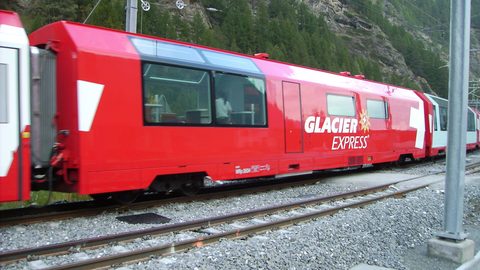 Glacier Express Zermatt to St Moritz Is Eight Hours on the Slowest Express Train Worth It
-
 Bernina Express from Chur to Tirano the Panoramic Train and the Cheaper Local Alternative
-
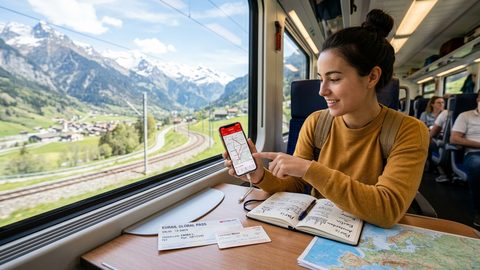 Planning a European Rail Trip Across Borders With Tickets and Mobile Data
Plan a cross-border European rail trip with clear advice on digital tickets, reservations, live departures, connections, and mobile data.
Planning a European Rail Trip Across Borders With Tickets and Mobile Data
Plan a cross-border European rail trip with clear advice on digital tickets, reservations, live departures, connections, and mobile data.