Arriving in Brussels by Rail: Why You Must Choose the Right Station Before Choosing the Train
Brussels has three main stations and picking the wrong one adds a dull 20-minute walk or a metro ride to your arrival. Here's how to choose.
- Flag
-

- ISO code
- BE
- Population
- 1,019,022
- Currency
- EUR
- Timezone
- Europe/Brussels
Arriving in Brussels by Rail: Why You Must Choose the Right Station Before Choosing the Train
The most common error travellers make when planning a trip to Belgium is booking a ticket to "Brussels" without checking which of the city's four mainline stations their train actually terminates at. Arriving at the wrong one can add 30 minutes and a fumbled metro transfer to your first hour in the country. Reverse the usual order: decide which station you need, then buy the ticket that puts you there. For anyone travelling Brussels by rail, the station choice determines everything from onward connections to walking distance from your accommodation.
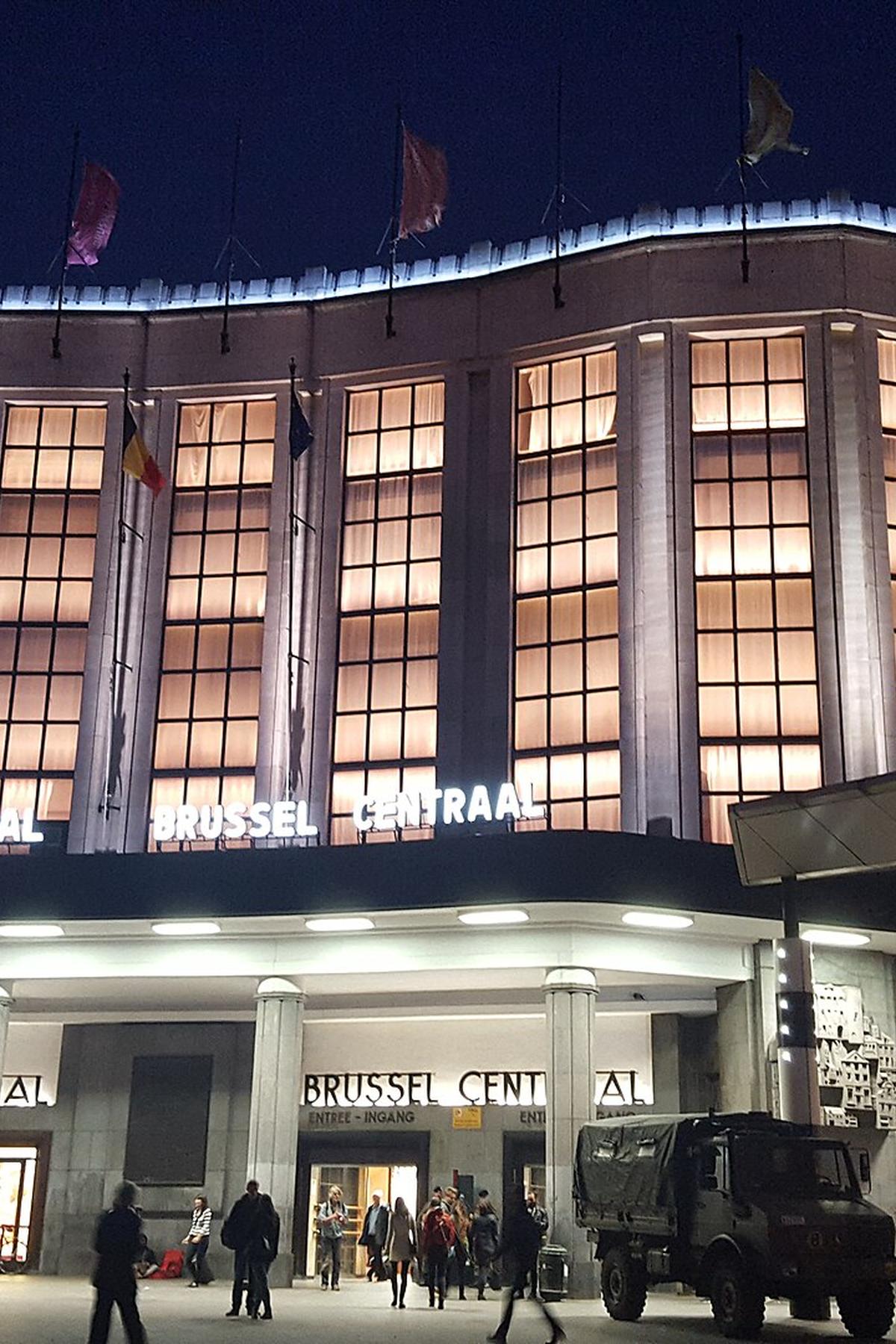
Brussels has four principal mainline stations: Midi, Central, Nord, and Luxembourg. A fifth, Schuman, handles regional RER services. They are linked by the North-South Junction, a 3.8 km six-track tunnel that carries up to 96 trains per hour in each direction on a weekday. That frequency makes it possible to land at any of the four and still reach the others in under 10 minutes. But not all stations offer the same connections. Midi is the only stop for Eurostar and international high-speed services. Central drops you at the foot of the Grand Place. Nord puts you in the business district. Luxembourg serves the European Quarter and Ixelles. Pick the wrong one and you are not stranded, but you have wasted a journey.
.jpg)
Brussels Train Stations Guide: the Four Mainline Stations and What Each is for
The official names reflect Belgium’s bilingual structure. Bruxelles-Midi / Brussel-Zuid is the international gateway. Bruxelles-Central / Brussel-Centraal sits in the historic core. Bruxelles-Nord / Brussel-Noord anchors the business district. Bruxelles-Luxembourg / Brussel-Luxemburg serves the EU institutions. Treat the station name as a route decision tool, not a destination label.
Brussels-Midi: The Eurostar Terminal And International Hub
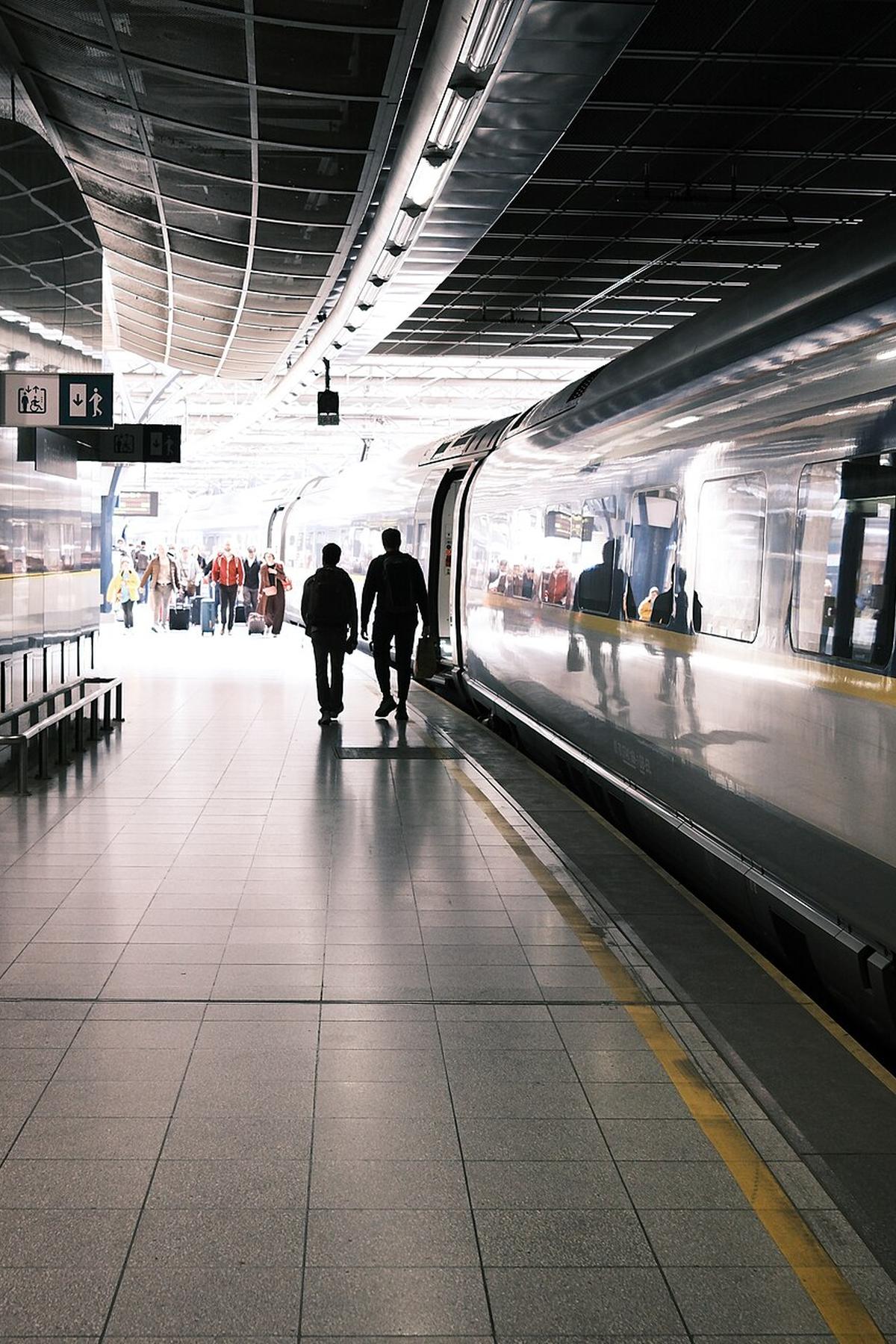
All Eurostar trains from London to Brussels terminate at Midi, station code BEFBMZ. The same applies to former Thalys routes from Paris, Amsterdam, and Cologne. Midi is also where TGV and ICE services from France and Germany arrive. The station sits in Saint-Gilles, adjacent to Anderlecht. Onward connections include InterCity trains within Belgium, RER S-trains, metro lines 2 and 6, and tram lines 3, 4, 51, and 82. The neighbourhood around Midi is a 20-minute walk from the Grand Place and lacks the charm of Central's surroundings. If your hotel is in the historic centre, do not stay on the Midi platform. Buy a ticket from SNCB, the national operator, and ride one stop to Central.
Brussels-Central: The Historic Centre Stop
Central, station code BEFBCE, sits at the top of the Mont des Arts, a five-minute downhill walk to the Grand Place. It handles InterCity services within Belgium and RER S-trains. There are no international departures from Central. Metro lines 1 and 5 stop here. If your accommodation is within the medieval core, the Marolles antique quarter, or Saint-Gilles, Central is the station to target. The station layout is compact, with ticket gates at both ends and a left luggage office on the lower level. Arrive here directly from Brussels Airport-Zaventem on an SNCB InterCity service in 17-20 minutes.
Brussels-Nord: The Business District And North Side Access
Nord, station code BEFBNO, sits in the Quartier Nord business district, in the municipality of Saint-Josse-ten-Noode. It serves InterCity trains within Belgium and RER S-trains. Metro lines 2 and 6 and tram lines 3, 4, 25, and 55 connect here. No international services call at Nord. Use Nord if your hotel is in the Schaerbeek or Laeken areas, or if you are connecting north toward Antwerp or the airport. The journey from the airport to Nord takes 11-15 minutes, the shortest of the four main stations.
Brussels-Luxembourg: The European Quarter And Ixelles
Luxembourg, station code LX, serves the European Quarter and the Leopold Quarter, in the Ixelles municipality. It handles InterCity services within Belgium and RER S-trains. There is no metro at Luxembourg, but the bus hub connects to the rest of the city. Use Luxembourg if your destination is the EU institutions, the Parc du Cinquantenaire, or the Ixelles ponds. It is a 20-minute walk from the Grand Place; the tram and bus network fills the gap.
Arriving in Brussels by Train: Practical Arrivals from Airport and Eurostar
The national operator for all rail services within Belgium is SNCB/NMBS. Book tickets at sncb.be or through the SNCB app. Fares are distance-based with flat-rate supplements on airport routes.
From Brussels Airport (BRU) To The City
The airport station, Brussels Airport-Zaventem (code FBNM), is operated by SNCB. InterCity and RER services run to Midi, Central, and Nord. Journey times: 20-25 minutes to Midi, 17-20 minutes to Central, 11-15 minutes to Nord. The ticket price includes the Diabolo supplement, a flat-rate fee for accessing the airport station. Do not buy a standard ticket and expect it to cover the airport leg; the Diabolo fee is mandatory. The 2024 Standard Ticket fare from the airport to Central sat in a band around €12. The SNCB journey planner at sncb.be/en/timetable shows current fares and journey times.
From Eurostar At Midi To The Rest Of Brussels
Eurostar arrives only at Midi. After clearing customs and exiting the secure zone, follow signs for SNCB/NMBS services within Belgium. The transfer to the domestic platforms involves walking a short indoor distance and descending one level. No ticket purchase is needed if you already hold a through ticket covering Brussels. If you are buying a ticket after arrival, use the blue SNCB ticket machines or the SNCB app. Paper tickets from machines carry a surcharge of €1-2; tap a contactless bank card at the ticket gates instead. The fare from Midi to Central on a Standard Ticket sits in a band around €3. A connecting train departs every few minutes during the day.
From Brussels South Charleroi (CRL) To Midi
Charleroi Airport has no rail connection. The Flibco bus runs to Brussels Midi in 55 minutes. The 2024 fare sat in a band around €17. Book the bus online in advance; same-day purchase is possible but queues form at peak hours. Once at Midi, follow the domestic transfer instructions above.
SNCB Brussels Connections: Tickets, Fares, and What to Verify Before Travel
SNCB's fare structure for 2026 includes four main ticket types. The Standard Ticket is full-flex, valid on any departure. The Weekend Ticket is a return ticket offering a 50% reduction versus two Standard singles, valid for travel starting after 19:00 on Friday and all day Saturday and Sunday. The Youth Ticket is a flat-rate one-way fare for passengers under 26. The Senior Ticket is a flat-rate one-way fare for passengers 65 and older. For distances above roughly 40 km, Youth and Senior flat-rate tickets undercut the Standard Ticket. The Weekend Ticket return price is roughly equal to one Standard Ticket single for the same distance.
These fares are revised annually. SNCB publishes its transport plan every December; the next revision is December 2026. Before travel, open the SNCB journey planner at sncb.be/en/timetable and verify the departure time, platform, and fare. Engineering works are published at sncb.be/en/travel-info/works-on-the-network. Weekend and evening travel frequently face track maintenance that alters platform assignments or replaces trains with buses.
Payment inside the station requires a contactless bank card for the ticket gates. Paper tickets remain available from machines and counters but incur the surcharge. The MOBIB card is a reloadable smart card used by locals; visitors rarely need it for a short stay.
Brussels Central vs Midi: How to Decide Between the Two Key Stations
This decision is the most common fork in any Brussels rail journey. Here is how to resolve it.
Choose Midi if: you are arriving on Eurostar, TGV, ICE, or any international high-speed service. All of them terminate at Midi. If your hotel is in Saint-Gilles or near the Midi neighbourhood, stay put. If your hotel is in the historic centre, buy a domestic SNCB ticket from Midi to Central. The journey takes 3 minutes. Do not walk; the route is a dull 20-minute slog through the Midi underpass and the Boulevard de l'Impératrice.
Choose Central if: you are arriving from a domestic SNCB InterCity service and your destination is the historic centre, the Marolles, or the Mont des Arts. Central has no international departures. If you are arriving from the airport, Central is the best station for the Grand Place, the Cantillon Brewery, and the majority of hotels in the centre.
The failure case: You book a Eurostar ticket and select "Brussels" as your destination. Your ticket defaults to Midi. You arrive at Midi and walk to the Grand Place. This takes 20 minutes through a neighbourhood that is functional but not scenic. You could have ridden one stop to Central for a few euros and emerged at the top of the Mont des Arts, a two-minute walk to the Grand Place. The difference matters when you are carrying luggage.
Brussels Station Layout, Left Luggage, and Payment
Each station has its own layout quirks. At Midi, the Eurostar arrivals hall is on the upper level. Domestic platforms are on the lower level. The left luggage office is near platform 1, open daily until 22:00. At Central, ticket gates separate the main hall from the platforms. The left luggage office is on the lower level near the exit to the Mont des Arts. At Nord, the station is a through-station with platforms accessed from a single concourse. Left luggage is available but limited. At Luxembourg, the station is small and above ground; left luggage is not available.
Ticket gates at all four stations accept contactless bank cards. Tap your card on the reader to open the gate. The fare is charged to your card when the day's transactions settle. Do not tap another card on the same journey; the system charges per tap. Paper tickets bought from machines or counters must be inserted into the gate slot to open it. Keep the paper ticket until you exit the system at your destination, as gates at some stations require it to open again.

Who Brussels Suits and Who Should Skip it
Brussels works best for beer pilgrims and Trappist-chasers, comic strip and Art Nouveau architecture fans, EU and history buffs, foodies prioritising frites and chocolate over fine dining, and slow travellers who enjoy aimless wandering in medieval cores. The city does not suit thrill-seekers looking for dramatic alpine or coastal scenery, nightlife maximalists expecting 24-hour chaos, or travellers who get frustrated when locals do not switch to English unprompted. Minimum three days: one each for Brussels, a Flemish art city such as Ghent or Bruges, and a serious exploration of a specific obsession: beer, WWI sites, Ardennes nature. The single thing that most often goes wrong is assuming Brussels is a single-station city. It is not. Choose your station before you choose your train, and the rest of the trip runs smoother.
| Station | Neighbourhood | International Services | Metro Lines | Walking Time To Grand Place |
|---|---|---|---|---|
| Midi | Saint-Gilles | Eurostar, TGV, ICE, Thalys legacy | 2, 6 | 20 min |
| Central | Historic Centre | None | 1, 5 | 2 min |
| Nord | Quartier Nord | None | 2, 6 | 25 min |
| Luxembourg | European Quarter | None | None (bus hub) | 20 min |
Travelling Onward: Day Trips by Rail from Brussels
Brussels is the rail hub for Belgium. From Central or Midi, SNCB InterCity services connect to the major day-trip destinations. Ghent takes 30 minutes; the one-way fare sits in a band around €11. Bruges takes 1 hour; the one-way fare sits in a band around €16. Antwerp takes 45 minutes; the one-way fare sits in a band around €9. Dinant takes 1 hour 30 minutes; the one-way fare sits in a band around €14. Ypres WWI sites take 2 hours; the one-way fare sits in a band around €22. Combine Ypres with a pre-booked minibus tour of cemeteries.
A common mistake is trying to day-trip Bruges, Ghent, and Antwerp from a single Brussels base in 3 days. This collapses into identical train stations and rushed market squares, leaving zero time for the spontaneous brown café stops that define the country. Pick one city per day and spend the rest of the time in Brussels.
More on Brussels
Common Questions
Which Brussels station do I arrive at on Eurostar from London?
Eurostar terminates only at Bruxelles-Midi/Brussel-Zuid. From there, buy a domestic SNCB ticket to Central for the historic centre, or connect to metro lines 2 and 6 for other districts.
Can I buy a Brussels rail ticket at the station without a contactless card?
Yes. Ticket machines and counters accept cash and cards, but paper tickets carry a €1-2 surcharge. Contactless bank card tap at the gates avoids the surcharge and is faster.
How long does it take to get from Brussels Airport to Central station?
The SNCB InterCity service from Brussels Airport-Zaventem to Central takes 17-20 minutes. The 2024 fare sat in a band around €12, including the Diabolo supplement. Check sncb.be for current times.
Is there a left luggage office at every Brussels station?
No. Midi and Central have left luggage offices open until 22:00. Nord has limited availability. Luxembourg has no left luggage. Use Midi or Central for storing bags.
Read next
-
 Belgium Trains Tickets Stations and the Rules That Catch Visitors
Belgium trains are frequent but the ticket rules, station layouts and payment quirks trip up even seasoned travellers. What to know before you tap or buy.
Belgium Trains Tickets Stations and the Rules That Catch Visitors
Belgium trains are frequent but the ticket rules, station layouts and payment quirks trip up even seasoned travellers. What to know before you tap or buy.
-
 Which Brussels Station Midi Central Nord or Luxembourg
Midi is the international hub, Central is the one you actually want, Nord is the business district, and Luxembourg serves the EU quarter. Pick carefully.
Which Brussels Station Midi Central Nord or Luxembourg
Midi is the international hub, Central is the one you actually want, Nord is the business district, and Luxembourg serves the EU quarter. Pick carefully.