Making Sense of Europe’s Patchwork Rail System
Europe’s rail network is not one system but a dozen national ones stitched together. Here is how the connections, apps, and validation rules actually work across borders.
Europe’s Patchwork Rail System
Europe’s rail network is not one system. It is a dozen national systems that happen to touch at the borders, and the first thing the marketing for rail passes does not tell you is that a train leaving Paris for Milan follows French rules until the tunnel, then resets entirely. The apps change. The validation rules change. The definition of what counts as a ticket changes. Crossing a border by train means crossing a regulatory boundary where the wrong piece of paper costs you a fine. Understanding how the network actually behaves, where the friction lives, and how to move through it without paying for a mistake you did not know you were making is the difference between a smooth journey and an expensive lesson.
- Minimum Days For A Multi-Country Trip: 10 days. Anything less burns two of them in transit and jet lag, leaving a single-city sampler.
- Peak Season: June through August. Accommodation prices rise 50, 150% in hotspots. Paris, Rome and Barcelona operate at maximum tourist density.
- Avoid These Windows: August in Italy and France (closed shops, packed beaches). Christmas to New Year in capitals (limited hours, thin transport). Easter week in Rome, Seville and Prague (pilgrims plus holidaymakers).
- The One Distinction That Matters: Reservation-compulsory high-speed (France, Spain, Italy, Eurostar) vs turn-up-and-go high-speed (Germany, Austria, Switzerland, Czechia). The wrong assumption costs you a seat or a fine.
The Problem with National Apps and Paper Tickets
Eleven Apps for Eight Countries
You need a separate app for each country’s railway. SNCF for France. DB Navigator for Germany. Trenitalia for Italy. Renfe for Spain. SBB for Switzerland. ÖBB for Austria. NS for the Netherlands. SNCB for Belgium. SJ for Sweden. PKP Intercity for Poland. ČD for Czechia. That is eleven apps for eight of the most common countries. Each one has a different interface, a different login requirement, a different payment processor, and a different rule about whether the ticket is valid the moment you buy it or needs a separate validation step before boarding.
Paper Tickets and the Validation Trap
Paper tickets are worse. In France, Italy, Spain and much of Central Europe, an unvalidated paper ticket is treated the same as no ticket at all. The validation machines sit on the platform, not in the station hall. They are easy to miss when you are watching the departure board. Fail to stamp your ticket before boarding and the inspector issues the fine. The fine is not a warning. It is the full fare plus an administrative penalty, and paying it on the spot is the only option that avoids escalation.
Digital tickets on the operator’s own app activate automatically. Third-party resellers do not always sync that activation. If you bought through a site that aggregates multiple operators, open the app before you reach the platform and confirm the ticket shows “active” or “validated.” A screenshot of a purchase confirmation is not a ticket.

.jpg)
How Border Crossings Reset the Rules
Two Sets of Rules on One Train
A high-speed train running from Paris to Milan changes operator responsibility at the border. The SNCF segment runs on French LGV tracks with French booking rules. The Italian segment runs on Trenitalia’s network with Italian validation rules. Even if you bought one ticket, the train carries two sets of conditions. The inspector who boards in Turin checks for an Italian-compatible seat assignment. If your ticket does not include one for the Italian portion, you pay a supplement or you get off.
France, Spain, Italy, and the Eurostar routes require a seat booking. You buy a ticket, but the ticket is useless without one attached, and those bookings sell out on popular departures. Germany, Austria, Switzerland, the domestic routes in the Netherlands, and Czechia are turn-up-and-go. You buy a ticket valid for a route and board any train in that category on that day. No booking needed. The problem is that many cross-border routes mix both systems. An ICE train from Frankfurt to Paris runs as turn-up-and-go inside Germany but becomes booking-mandatory the moment it enters French LGV track. The DB app may sell you a ticket that looks valid, but if the French segment lacks a seat assignment, you are riding without one on a train that does not allow standing in first class and fines standing passengers in second.
Night Trains and Roaming
Night trains layer another complication. Mandatory booking across every operator: Nightjet, European Sleeper, Intercités de Nuit, Snälltäget. You cannot board a couchette or sleeper without a seat assignment, and the seating carriages on Nightjet are the single exception that remains turn-up-and-go. Check which carriage type you booked before you walk to the platform.
Border crossings also reset roaming. EU roaming is free for EU SIMs, but the UK and Switzerland are excluded. Cross from France into Switzerland and your French SIM may still work under EU rules for a limited period. A UK SIM stops the moment the train enters the first Swiss tunnel. Buy a regional eSIM before departure. Public Wi-Fi at stations requires SMS verification that will not work on a foreign number.
| Route | Advance Fare Band | Full-Flex Fare Band | Operator |
|---|---|---|---|
| TGV Paris–Lyon | €25–€45 | €90–€120 | SNCF |
| ICE Berlin–Munich | €17.90–€35.90 | €120–€150 | DB |
| Frecciarossa Milan–Rome | €19.90–€39.90 | €80–€110 | Trenitalia |
| AVE Madrid–Barcelona | €25–€50 | €100–€130 | Renfe |
| Nightjet Vienna–Hamburg (Couchette) | €59–€99 | Not offered | ÖBB |
| Nightjet Vienna–Hamburg (Sleeper) | €99–€159 | Not offered | ÖBB |
When a Rail Pass Wins and When it Costs You
The Pass Pays Off on Flexible Multi-Stop Trips
The Eurail Global Pass (for non-Europeans) and the Interrail Global Pass (for Europeans) share the same 2025 pricing: €258 for 4 travel days in a month, €335 for 7 days, €422 for 15 continuous days, all second class adult fares. The pass wins on a multi-stop itinerary with four or more travel days, when you want flexibility to change plans the same morning, and during peak season when walk-up point-to-point fares exceed €80 per ride. If you are covering Berlin to Prague to Vienna to Budapest in ten days, the pass pays for itself on the two longest legs alone.
Reservation Fees Change the Math
But the pass does not include seat bookings. Every train that requires one charges a separate fee. France TGV booking fee is €10, €20. Spain AVE is €10, €15. Italy Frecciarossa is €10, €15. Eurostar is €30, €35. Nightjet couchette booking is €14, €20, sleeper is €24, €40. On a trip that uses six such trains, the add-on fees reach €90, €140. That changes the math. If your itinerary is two long-distance journeys booked a month ahead, the advance purchase fare from the operator is cheaper. A Paris, Lyon TGV booked three weeks out costs €25, while the pass plus booking fee costs about €40 in pass value plus €15. Skip the pass on a fixed short itinerary with advance bookings.
The pass also fails when you change countries every day. Each day you move counts toward your travel days even if the train is ninety minutes long. Wasting a day of a four-day pass on a short hop from Brussels to Amsterdam burns 25% of the pass value for a €25 point-to-point ticket.


The Practical First Step
Open Seat61.com and read the Europe page. Then download DB Navigator. That app runs the most comprehensive pan-European timetable and sells tickets for routes that cross multiple countries. Do not buy your first ticket from a third-party aggregator. Buy it from the operator that runs the train. You pay the same price, but you get direct access to the operator’s notification system for delays, cancellations, and platform changes. You also avoid the activation errors that resellers introduce. Book your seat assignment alongside the ticket. If the route requires one, the booking flow will force you to select a seat. If it does not, confirm the train is turn-up-and-go before you close the browser. One click on the wrong class of service on the wrong route and you have bought a piece of paper that does not let you board.
Countries in Europe
-
 Austria
's railways unite Alpine pass routes with Europe's densest night train network. Understand how the Arlberg line and Wien Hauptbahnhof sleeper hub connect mountain valleys to distant capitals.
Austria
Austria's railways unite Alpine pass routes with Europe's densest night train network. Understand how the Arlberg line and Wien Hauptbahnhof sleeper hub connect mountain valleys to distant capitals.
-
 Belgium
's rail network is compact but its ticket rules catch visitors out. Here's how SNCB fares, station choices and weekend deals actually work.
Belgium
Belgium's rail network is compact but its ticket rules catch visitors out. Here's how SNCB fares, station choices and weekend deals actually work.
-
 Czechia
's rail network surprises with Swiss-level branch-line density and fares that make spontaneous trips affordable. Understand the ČD-RegioJet duopoly and why the system punches above its weight.
Czechia
Czechia's rail network surprises with Swiss-level branch-line density and fares that make spontaneous trips affordable. Understand the ČD-RegioJet duopoly and why the system punches above its weight.
-
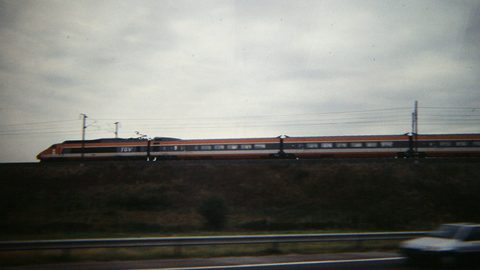
 France
's TGV network radiates from Paris, leaving cross-country connections sparse. Here is how the star works, where the gaps are, and how Ouigo differs from InOui.
France
France's TGV network radiates from Paris, leaving cross-country connections sparse. Here is how the star works, where the gaps are, and how Ouigo differs from InOui.
-
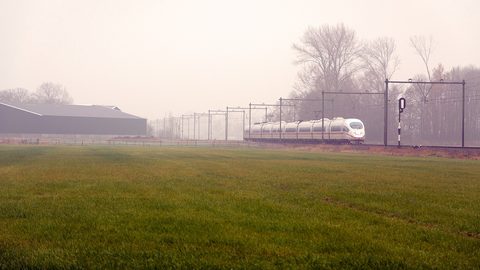
 Germany
's rail network is dense and reaches small towns, but ICE punctuality has slipped and the Deutschland-Ticket excludes long-distance trains. Here is how to make it work.
Germany
Germany's rail network is dense and reaches small towns, but ICE punctuality has slipped and the Deutschland-Ticket excludes long-distance trains. Here is how to make it work.
-
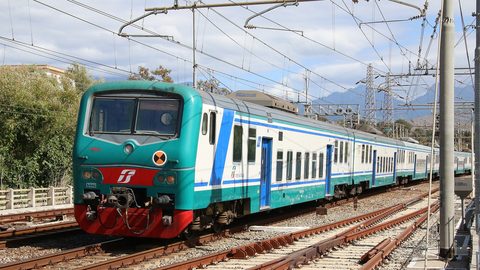
 Italy
Italy's rail network is more than the Frecciarossa spine. Discover the regional branch lines that climb through the Apennines and hug the Sicilian coast, and why they are worth the slower pace.
Italy
Italy's rail network is more than the Frecciarossa spine. Discover the regional branch lines that climb through the Apennines and hug the Sicilian coast, and why they are worth the slower pace.
-
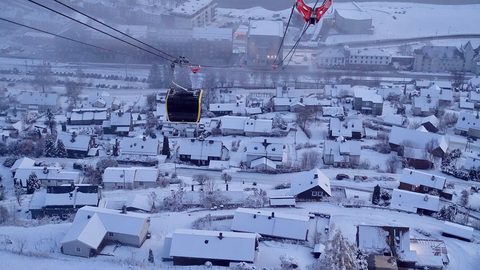
 Norway
 has four main rail corridors, not a sprawling network. Compare the Bergen, Dovre, Nordland, and Sørland lines to decide which one fits your limited time and scenic priorities.
Norway
Norway has four main rail corridors, not a sprawling network. Compare the Bergen, Dovre, Nordland, and Sørland lines to decide which one fits your limited time and scenic priorities.
-
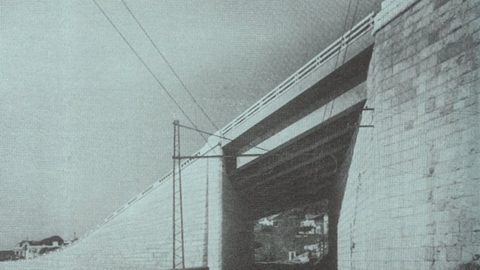
 Portugal
's rail network splits into three distinct experiences: the scenic Douro line, the coastal Algarve route, and the slow Alentejo interior. Choose the corridor that fits your travel temperament.
Portugal
Portugal's rail network splits into three distinct experiences: the scenic Douro line, the coastal Algarve route, and the slow Alentejo interior. Choose the corridor that fits your travel temperament.
-
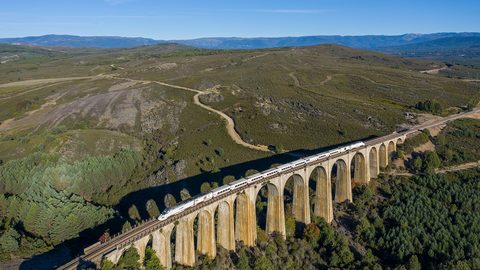
 Spain
Spain's AVE network is fast but leaves entire regions on older Iberian-gauge rails. Explore the conventional lines, from the FEVE coastal route to the Ronda railway, that the high-speed map ignores.
Spain
Spain's AVE network is fast but leaves entire regions on older Iberian-gauge rails. Explore the conventional lines, from the FEVE coastal route to the Ronda railway, that the high-speed map ignores.
-
 Switzerland
's rail network operates on a synchronised clockface timetable that makes every connection deliberate. Learn how the Taktfahrplan system works and why you can trust a three-minute change.
Switzerland
Switzerland's rail network operates on a synchronised clockface timetable that makes every connection deliberate. Learn how the Taktfahrplan system works and why you can trust a three-minute change.
-
 The Netherlands
The Dutch rail network runs with metro-like frequency across the Randstad. Learn how to treat the Netherlands as a single-base, multi-city day-trip circuit rather than a point-to-point journey.
The Netherlands
The Dutch rail network runs with metro-like frequency across the Randstad. Learn how to treat the Netherlands as a single-base, multi-city day-trip circuit rather than a point-to-point journey.
-
 United Kingdom
Britain's rail fares are a maze of advance, off-peak, and anytime tickets. Here's how to pick the right one and stop overpaying for the same seat.
United Kingdom
Britain's rail fares are a maze of advance, off-peak, and anytime tickets. Here's how to pick the right one and stop overpaying for the same seat.
More on Europe
-
 European Train Delays Your Rights and How to Claim Compensation
European rail passenger rights guarantee compensation for delays over an hour but claiming it requires knowing each operator's process. The forms, deadlines, and the HOTNAT rule explained.
European Train Delays Your Rights and How to Claim Compensation
European rail passenger rights guarantee compensation for delays over an hour but claiming it requires knowing each operator's process. The forms, deadlines, and the HOTNAT rule explained.
-
 Luggage and Bikes on European Trains Rules and Realities
European trains rarely weigh your luggage but overhead racks are tiny and bike rules vary wildly by operator. What you can bring, where it goes, and what gets you fined.
Luggage and Bikes on European Trains Rules and Realities
European trains rarely weigh your luggage but overhead racks are tiny and bike rules vary wildly by operator. What you can bring, where it goes, and what gets you fined.
-
 Train or Plane in Europe The Door to Door Arithmetic
A 90-minute flight looks faster than a four-hour train until you add airport transfers, security, and baggage reclaim. The door-to-door arithmetic for key European city pairs.
Train or Plane in Europe The Door to Door Arithmetic
A 90-minute flight looks faster than a four-hour train until you add airport transfers, security, and baggage reclaim. The door-to-door arithmetic for key European city pairs.
-
 Navigating Big European Train Stations Platforms and Transfers
-
 Taking European Trains With Children Without Losing Your Mind
European trains are not uniformly family-friendly. Here is how to book seats together, find dedicated family carriages, and handle stations with a stroller when the lift is broken.
Taking European Trains With Children Without Losing Your Mind
European trains are not uniformly family-friendly. Here is how to book seats together, find dedicated family carriages, and handle stations with a stroller when the lift is broken.
-
 Accessible Rail Travel in Europe The Real State of Assistance and Gaps
Step-free access and boarding assistance vary wildly across European rail networks. Here are the genuine gaps, the advance-notice requirements, and where the system fails at borders.
Accessible Rail Travel in Europe The Real State of Assistance and Gaps
Step-free access and boarding assistance vary wildly across European rail networks. Here are the genuine gaps, the advance-notice requirements, and where the system fails at borders.
-
 European Scenic Train Routes Worth Planning a Trip Around
Some European scenic train routes demand reservations and supplements; others you can ride with a standard regional ticket. Here is the shortlist of routes worth the detour.
European Scenic Train Routes Worth Planning a Trip Around
Some European scenic train routes demand reservations and supplements; others you can ride with a standard regional ticket. Here is the shortlist of routes worth the detour.
-
 Interrail Pass vs Point-to-Point Tickets How to Work It Out Before You Buy
An Interrail pass looks like freedom but compulsory reservations in France, Italy, and Spain add up fast. Here is the arithmetic to work out whether a pass or point-to-point tickets cost less.
Interrail Pass vs Point-to-Point Tickets How to Work It Out Before You Buy
An Interrail pass looks like freedom but compulsory reservations in France, Italy, and Spain add up fast. Here is the arithmetic to work out whether a pass or point-to-point tickets cost less.
-
 First Class on European Trains What It Buys You Country by Country
First class on European trains ranges from a wider seat and a newspaper to a full hot meal and lounge access. Here is what each operator actually delivers and when second class is enough.
First Class on European Trains What It Buys You Country by Country
First class on European trains ranges from a wider seat and a newspaper to a full hot meal and lounge access. Here is what each operator actually delivers and when second class is enough.
-
 What Run2Rail Was Before This An EU Railway Research Project Explained
This domain was originally home to Run2Rail, an EU Horizon 2020 research project on railway noise and running gear. Here is what the project achieved before the site changed purpose.
What Run2Rail Was Before This An EU Railway Research Project Explained
This domain was originally home to Run2Rail, an EU Horizon 2020 research project on railway noise and running gear. Here is what the project achieved before the site changed purpose.
-
 Interrail and Eurail Passes Explained for Europe Train Travel
Eurail and Interrail passes promise unlimited European train travel but reservation fees on high-speed routes can quietly double your costs. Do the maths before you buy.
Interrail and Eurail Passes Explained for Europe Train Travel
Eurail and Interrail passes promise unlimited European train travel but reservation fees on high-speed routes can quietly double your costs. Do the maths before you buy.
-
 European Train Seat Reservations You Must Book in Advance
Some European trains require a seat reservation before you board and fines are steep if you skip it. A country-by-country breakdown of compulsory, optional, and impossible reservations.
European Train Seat Reservations You Must Book in Advance
Some European trains require a seat reservation before you board and fines are steep if you skip it. A country-by-country breakdown of compulsory, optional, and impossible reservations.
-
 European Night Trains Routes Cabin Classes and What to Expect
European night trains save a hotel bill and a travel day but the cabin class you pick changes everything. Sleeper, couchette, or seated recliner explained honestly.
European Night Trains Routes Cabin Classes and What to Expect
European night trains save a hotel bill and a travel day but the cabin class you pick changes everything. Sleeper, couchette, or seated recliner explained honestly.
-
 Where to Buy European Train Tickets Without Overpaying
Third-party booking sites are easier but national railway operators sell cheaper tickets. A country-by-country guide to where you should actually buy European train tickets.
Where to Buy European Train Tickets Without Overpaying
Third-party booking sites are easier but national railway operators sell cheaper tickets. A country-by-country guide to where you should actually buy European train tickets.
Common Questions
Do I need a separate ticket for each country when crossing a border by train?
Not necessarily. Many cross-border routes are sold as a single ticket by one operator. But the ticket must include a seat booking for any segment that requires one. Buy from the operator that controls the longest portion of the route or use DB Navigator which shows multi-operator journeys.
What happens if I board without validating a paper ticket?
The inspector fines you the same amount as if you had no ticket at all. The fine is the full fare plus an administrative penalty, payable on the spot. Some operators allow payment by card, but carry cash as backup. Find the validation machine on the platform before boarding.
How do I know if a train requires a seat booking?
France TGV, Spain AVE, Italy Frecciarossa, Eurostar, Thalys, and all night trains require one. Germany ICE, Austria Railjet, Switzerland IC/IR, Czechia IC/EC, and Netherlands domestic trains are turn-up-and-go. Cross-border trains mix rules: check the operator that controls the first segment you board.
Is the Eurail pass cheaper than buying tickets separately?
It depends on your itinerary. The pass wins on flexible multi-stop trips over four or more travel days. It loses on fixed short itineraries where advance purchase fares from the operator cost less than the pass value plus booking fees. Calculate the total cost of pass plus all booking fees before buying.
Read next
-
Belgium
Belgium's rail network is compact but its ticket rules catch visitors out. Here's how SNCB fares, station choices and weekend deals actually work.
-
Spain
Spain's AVE network is fast but leaves entire regions on older Iberian-gauge rails. Explore the conventional lines, from the FEVE coastal route to the Ronda railway, that the high-speed map ignores.
-
Norway
Norway has four main rail corridors, not a sprawling network. Compare the Bergen, Dovre, Nordland, and Sørland lines to decide which one fits your limited time and scenic priorities.
-
Austria
Austria's railways unite Alpine pass routes with Europe's densest night train network. Understand how the Arlberg line and Wien Hauptbahnhof sleeper hub connect mountain valleys to distant capitals.
-
Portugal
Portugal's rail network splits into three distinct experiences: the scenic Douro line, the coastal Algarve route, and the slow Alentejo interior. Choose the corridor that fits your travel temperament.
-
Italy
Italy's rail network is more than the Frecciarossa spine. Discover the regional branch lines that climb through the Apennines and hug the Sicilian coast, and why they are worth the slower pace.
-
European Train Delays Your Rights and How to Claim Compensation
European rail passenger rights guarantee compensation for delays over an hour but claiming it requires knowing each operator's process. The forms, deadlines, and the HOTNAT rule explained.
-
Luggage and Bikes on European Trains Rules and Realities
European trains rarely weigh your luggage but overhead racks are tiny and bike rules vary wildly by operator. What you can bring, where it goes, and what gets you fined.
-
Train or Plane in Europe The Door to Door Arithmetic
A 90-minute flight looks faster than a four-hour train until you add airport transfers, security, and baggage reclaim. The door-to-door arithmetic for key European city pairs.