Interrail Pass or Individual Tickets The Arithmetic Before You Commit
An Interrail pass looks like freedom but compulsory reservations in France, Italy, and Spain add up fast. Here is the arithmetic to work out whether a pass or point-to-point tickets cost less.


Interrail Pass or Individual Tickets the Arithmetic Before You Commit
You want to visit four countries by train and you have heard two opposing things: that a Eurail pass is the golden ticket and that it is a waste of money. Both statements are true. Your job is to figure out which one applies to your itinerary before you hand over a few hundred euros. The answer depends on two numbers you have likely underestimated: the route you choose and the reservation fees that a pass does not cover.
The arithmetic is straightforward. A Eurail Global Pass for an adult travelling second class costs between EUR 200 and EUR 300 for a 4 day pass valid within one month, EUR 300 to EUR 400 for 7 days in one month, and EUR 400 to EUR 500 for 10 days across two months. A 15 day continuous pass runs EUR 400 to EUR 550. A full month continuous pass costs EUR 600 to EUR 800. These are the figures published by Eurail B.V. for 2026. Against that, you compare the sum of advance purchase point to point tickets for the same legs. If the advance fares total less than the pass plus the reservation fees you will have to pay as a pass holder, you buy tickets. If the tickets cost more, you buy the pass.
| Cost Element | Route A: Paris Amsterdam Berlin Prague (4 Travel Days) | Route B: Switzerland Loop (7 Travel Days) | Route C: Paris Lyon Return (2 Travel Days) |
|---|---|---|---|
| Advance tickets (2nd class, booked 2 3 months out) | EUR 35 (Paris Amsterdam) + EUR 25 (Amsterdam Berlin) + EUR 20 (Berlin Prague) = EUR 80 | Approx. CHF 400 600 (full fare, no half fare card) or EUR 360 540 at typical exchange | EUR 50 80 (Paris Lyon return on Ouigo or inOui) |
| Pass cost (adult 2nd class) | EUR 200 300 (4 day flexi pass) | EUR 300 400 (7 day flexi pass) | EUR 200 300 (4 day flexi pass, minimum for 2 days) |
| Pass holder reservation fees | EUR 15 25 Thalys (Paris Amsterdam) + EUR 0 Berlin Prague (no reservation needed) = EUR 15 25 | EUR 0 (Swiss domestic IC/IR reservations are optional at no charge) | EUR 10 20 per train = EUR 20 40 total (TGV mandatory reservation) |
| Total pass + reservations | EUR 230 325 | EUR 300 400 | EUR 220 340 |
| Winner | Buy advance tickets. They cost EUR 80 vs pass total EUR 230 325. | Buy the pass. Advance tickets cost EUR 360 540 vs pass total EUR 300 400. | Buy advance tickets. They cost EUR 50 80 vs pass total EUR 220 340. |
The Hidden Cost That Flips the Calculation: Reservation Fees
The table reveals the trap. On Route A across France, Belgium, Germany and the Czech Republic, the advance tickets cost only EUR 80. The pass itself is EUR 200 300, plus you still need to pay EUR 15 25 for a compulsory Thalys seat between Paris and Amsterdam. That makes the pass more expensive by a factor of two to three. On Route C, the Paris Lyon return, the gap is even bigger. On Route B, through Switzerland, the pass wins because Swiss domestic trains on SBB require no booking fee and the full price tickets are expensive.
Where Booking Fees Cost You
France and Spain are the most punishing for pass holders. TGV domestic seats cost EUR 10 to EUR 20 per train. International TGV runs cost EUR 20 to EUR 35. Spanish AVE domestic seats run EUR 10 to EUR 15, international ones EUR 15 to EUR 25. Eurostar from Paris to London adds EUR 30 to EUR 35 per person per direction. Thalys from Paris to Brussels or Amsterdam adds EUR 15 to EUR 25. Italian Frecciarossa and Italo trains charge EUR 10 to EUR 15 per seat. These fees are not optional. You cannot board without them, and on popular departures the pass holder quota can sell out, locking you onto a later train.
Where You Board Without Paying Extra
Germany and Austria flip the logic. Deutsche Bahn ICE trains let you step on without any booking at all. You can pay for a seat if you want one, but you do not have to. The same applies to Swiss SBB domestic IC and IR trains. This makes a pass far more attractive in Central and Alpine Europe because every euro you pay for the pass goes toward the fare, not toward surcharges. The worked example in the fact sheet for 2026 shows a 7 day flexi pass for a Zurich Lucerne Interlaken Montreux Zermatt St. Moritz Geneva loop costing about EUR 350 in pass fees plus zero in bookings, against roughly CHF 400 600 in advance tickets. The pass saves you money and gives you the freedom to change your mind each morning.
The Night Train Arithmetic
Night trains count as a single travel day on a flexi pass, but the accommodation supplements are steep. A couchette on a Nightjet costs EUR 15 to EUR 35, and a sleeper EUR 30 to EUR 80. That can still beat a hotel room for a night, but if your route has no night trains you are paying for a travel day and a bed. Do the math on the sleeper supplement versus a cheap hostel before you assume the pass saves you accommodation money.
The Psychological Trap: Do Not Over Travel to Justify the Pass
The most expensive mistake pass buyers make is the opposite of the one you expect. They do not overpay for the pass. They over travel to make the pass feel worthwhile. A Eurail pass that costs EUR 400 tempts you to use it every single day. You look at the calendar and think, I paid for 7 days, I must ride a train on all 7. That impulse pushes you into five capitals in ten days, which forces you to spend a third of your trip staring at train station platforms rather than actually being anywhere. The common mistake across Europe is exactly this: treating a trip as a checklist of cities rather than a collection of experiences.
If your ideal trip is a slow loop through Switzerland with a few mountain trains and long walks between stations, a pass suits you. If your ideal trip is a direct high speed run from Paris to Amsterdam to Berlin to Prague over two weeks, buy the advance tickets. Stay in each city for three or four nights. Stop moving five days out of fourteen. You will see more, spend less, and never have to ask yourself why you are on a train to a city you barely wanted to visit.


Worth it if
- Pass wins for multi stop itineraries in Germany, Austria, and Switzerland where booking fees are zero
- Pass wins for night train routes where you combine transport and accommodation in one travel day
- Pass wins for improvised travel where you may change destinations mid trip
- Pass wins for Switzerland specifically: full price advance tickets are expensive and passes cover all private railways
Skip it if
- Pass loses for France, Spain, and Italy where high booking fees plus cheap advance fares make tickets cheaper
- Pass loses for any itinerary with only two or three long high speed legs booked far ahead
- Pass loses for budget travellers who can book Ouigo (EUR 10 25 Paris Lyon) or Avlo (EUR 15 50 Madrid Barcelona) tickets
- Pass psychologically pressures you to travel more days than you want, turning your holiday into a transit marathon
Read next
-
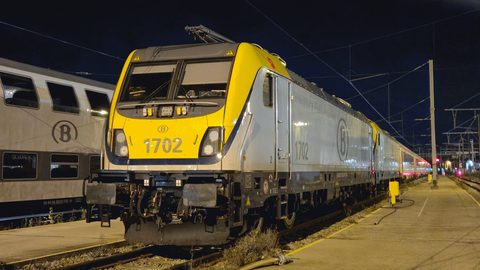
 Belgium
's rail network is compact but its ticket rules catch visitors out. Here's how SNCB fares, station choices and weekend deals actually work.
Belgium
Belgium's rail network is compact but its ticket rules catch visitors out. Here's how SNCB fares, station choices and weekend deals actually work.
-
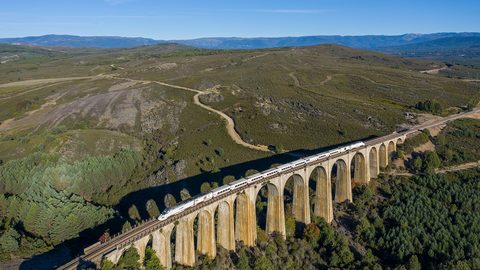
 Spain
Spain's AVE network is fast but leaves entire regions on older Iberian-gauge rails. Explore the conventional lines, from the FEVE coastal route to the Ronda railway, that the high-speed map ignores.
Spain
Spain's AVE network is fast but leaves entire regions on older Iberian-gauge rails. Explore the conventional lines, from the FEVE coastal route to the Ronda railway, that the high-speed map ignores.
-
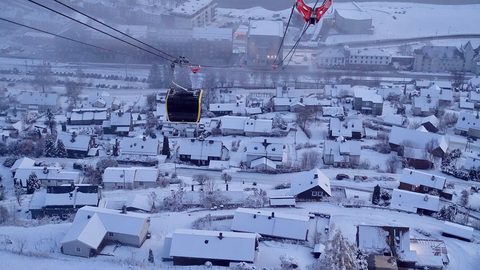
 Norway
 has four main rail corridors, not a sprawling network. Compare the Bergen, Dovre, Nordland, and Sørland lines to decide which one fits your limited time and scenic priorities.
Norway
Norway has four main rail corridors, not a sprawling network. Compare the Bergen, Dovre, Nordland, and Sørland lines to decide which one fits your limited time and scenic priorities.
-
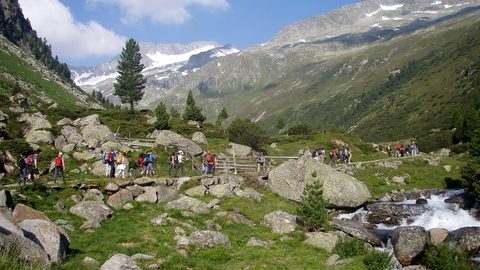
 Austria
's railways unite Alpine pass routes with Europe's densest night train network. Understand how the Arlberg line and Wien Hauptbahnhof sleeper hub connect mountain valleys to distant capitals.
Austria
Austria's railways unite Alpine pass routes with Europe's densest night train network. Understand how the Arlberg line and Wien Hauptbahnhof sleeper hub connect mountain valleys to distant capitals.
-
 Portugal
's rail network splits into three distinct experiences: the scenic Douro line, the coastal Algarve route, and the slow Alentejo interior. Choose the corridor that fits your travel temperament.
Portugal
Portugal's rail network splits into three distinct experiences: the scenic Douro line, the coastal Algarve route, and the slow Alentejo interior. Choose the corridor that fits your travel temperament.
-
 Italy
Italy's rail network is more than the Frecciarossa spine. Discover the regional branch lines that climb through the Apennines and hug the Sicilian coast, and why they are worth the slower pace.
Italy
Italy's rail network is more than the Frecciarossa spine. Discover the regional branch lines that climb through the Apennines and hug the Sicilian coast, and why they are worth the slower pace.
-
 European Train Delays Your Rights and How to Claim Compensation
European rail passenger rights guarantee compensation for delays over an hour but claiming it requires knowing each operator's process. The forms, deadlines, and the HOTNAT rule explained.
European Train Delays Your Rights and How to Claim Compensation
European rail passenger rights guarantee compensation for delays over an hour but claiming it requires knowing each operator's process. The forms, deadlines, and the HOTNAT rule explained.
-
 Luggage and Bikes on European Trains Rules and Realities
European trains rarely weigh your luggage but overhead racks are tiny and bike rules vary wildly by operator. What you can bring, where it goes, and what gets you fined.
Luggage and Bikes on European Trains Rules and Realities
European trains rarely weigh your luggage but overhead racks are tiny and bike rules vary wildly by operator. What you can bring, where it goes, and what gets you fined.
-
 Train or Plane in Europe The Door to Door Arithmetic
A 90-minute flight looks faster than a four-hour train until you add airport transfers, security, and baggage reclaim. The door-to-door arithmetic for key European city pairs.
Train or Plane in Europe The Door to Door Arithmetic
A 90-minute flight looks faster than a four-hour train until you add airport transfers, security, and baggage reclaim. The door-to-door arithmetic for key European city pairs.