How to Get Through a Major European Railway Station in Twenty Minutes
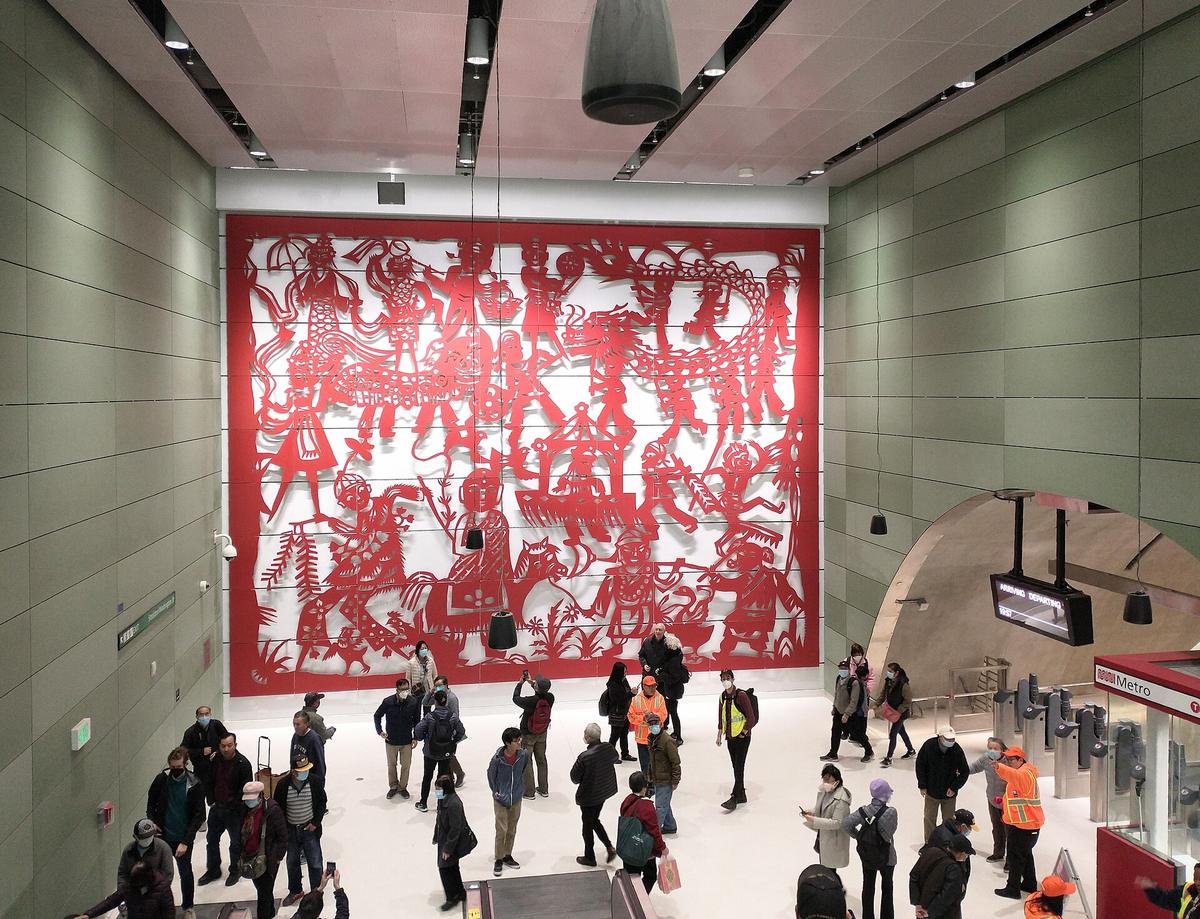

Your Platform Number Appears 10 to 20 Minutes Before Departure
You are standing in front of a departure board in a station the size of an airport, and the platform column is still blank. The train leaves in 22 minutes. Here is the answer: the official connection time at most major European stations is 8 to 15 minutes, but you need a self-imposed buffer of 20 minutes because the platform number only appears 10 to 20 minutes before departure. Your carriage might be a six minute walk from the stairs.
The board works the same way across the continent. Trains are listed by departure time, destination, and train number. The platform column (voie, binario, Gleis, andén) stays empty until the system assigns a track. In France, SNCF posts the platform 20 minutes before departure. In Germany, DB shows it 10 to 15 minutes out. In Italy, Trenitalia waits until 10 to 20 minutes before. In Switzerland, SBB posts platforms from 06:00 on the day of travel, which means your 14:00 train might have a platform assigned at breakfast. In Austria, ÖBB posts from midnight. In Spain, Renfe publishes 10 to 15 minutes before departure.
Do not wait for the board to update while standing in the middle of the concourse. Find the board, read it, then move to the edge of the hall nearest your likely departure wing. When the platform appears, you have a sprint ahead, not a stroll.
The Real Distance: Platforms Split Into Sections a Through F
Thirty meters is not the distance. A platform can run the length of four football pitches, and your carriage might be at the far end. High speed trains are long. An ICE train stretches over 200 metres. A TGV or Frecciarossa can exceed that by a third. The unwritten rule that catches first timers: the platform number tells you the track, not where your carriage stops.
Read the Carriage Position Board Before You Descend
Every major operator posts a carriage position board near the platform entrance. In France, look for Composition des trains. In Germany, Wagenstandsanzeiger. In Switzerland, Sektor Tafeln. In Italy, Composizione treni. In Austria, Wagenstandanzeiger. In Spain, Composición del tren. These boards show which section of the platform (A, B, C, D, E, F) matches each carriage number. Find your carriage letter, locate it on the board, and walk directly to that section. Board at the wrong end and you are walking the length of a train inside a narrow aisle with luggage.
Validate Before You Go Through the Gate
Validation is the second trap. Paper tickets must be stamped in the orange or yellow machines near the platform entrance before you descend. This applies on SNCF regional trains, Trenitalia regional trains, DB regional trains, and some SBB routes. High speed tickets are usually validated by the conductor, but regional tickets are not. An unstamped paper ticket earns the same fine as no ticket. The machines are on the concourse side of the barriers, not on the platform. Validate before you go through the gate.
Minimum Connection Times: Your Realistic Number is 20 Minutes
The official connection times published by each operator assume a perfect day with no crowds, no luggage, and no confusion. The 2025 values are as follows: Paris Gare de Lyon and Gare du Nord, 10 minutes each (SNCF). Milano Centrale, 15 minutes (Trenitalia). München Hbf, 8 minutes (DB). Zürich HB, 7 minutes (SBB). Wien Hbf, 10 minutes (ÖBB). Madrid Puerta de Atocha, 10 minutes (Renfe). These numbers apply only when your entire journey is booked on a single ticket. Book two separate tickets and you have no guarantee. Miss the connection and you buy a new ticket.
Add 10 minutes to the official number as a buffer. A 7 minute connection in Zürich becomes 17 minutes. An 8 minute connection in München becomes 18 minutes. A 15 minute connection in Milano becomes 25 minutes. Add another 5 minutes if you need to retrieve left luggage, use a restroom, or buy food. Left luggage facilities at most major stations operate 06:00 to 23:00, with slight variations. Paris Gare du Nord and Gare de Lyon close at 23:15 and 23:00 respectively. Milano Centrale closes at 23:00. München Hbf closes at 22:00. Wien Hbf closes at 23:00. Madrid Puerta de Atocha closes at 22:30.
| Station | Operator | Minimum Time | Recommended Buffer |
|---|---|---|---|
| Paris Gare de Lyon | SNCF | 10 min | 20 min |
| Paris Gare du Nord | SNCF | 10 min | 20 min |
| Milano Centrale | Trenitalia | 15 min | 25 min |
| München Hbf | DB | 8 min | 18 min |
| Zürich HB | SBB | 7 min | 17 min |
| Wien Hbf | ÖBB | 10 min | 20 min |
| Madrid Puerta de Atocha | Renfe | 10 min | 20 min |
Cross City Transfers and Paris Station Pairs
Paris is the most common failure point. The city has six major stations for long distance trains, and they are not connected by a walking tunnel. A cross city transfer, for example from Gare du Nord to Gare de Lyon, requires the metro or RER. SNCF recommends 60 minutes for a cross city transfer. Do not attempt it in 30 minutes. The stations are at these addresses: Gare du Nord is at 18 rue de Dunkerque, 75010. Gare de Lyon is at Place Louis Armand, 75012. Gare de l'Est is at Place du 11 Novembre 1918, 75010. Gare Montparnasse is at 17 boulevard de Vaugirard, 75015. Gare Saint Lazare is at 13 rue d'Amsterdam, 75008. Gare d'Austerlitz is at 85 quai d'Austerlitz, 75013.
In Madrid, Puerta de Atocha and Chamartín are the two main stations. Chamartín is at Calle de Agustín de Foxá, 28036. Atocha is at Plaza del Emperador Carlos V, 28045. The Cercanías train connects them in about 15 minutes. The connection time at Atocha is 10 minutes if your train leaves from the same station. If you need to switch stations, budget 40 minutes.
Eat Before You Board, Not On The Platform
The food on the concourse is overpriced and mediocre. Every major station has a proper restaurant within a one minute walk of the entrance, not inside the ticketed area. At Paris Gare de Lyon, Le Train Bleu is in Hall 1 on the first floor. At Paris Gare du Nord, Terminus Nord is at 23 rue de Dunkerque, directly opposite the station. At Milano Centrale, Terrazza Gallia is on the 5th floor of the Excelsior Hotel Gallia at Piazza Duca d'Aosta. At München Hbf, Wirtshaus in der Au is in the station building on the east side. At Wien Hbf, L'Osteria is at the south entrance. At Madrid Puerta de Atocha, Samarkanda is inside the station's tropical garden. These are sit down restaurants, not takeaway counters. If you have 25 minutes, eat there. If you have 10, buy a sandwich from a proper bakery outside the station.

The Failure Case: What Happens When Everything Goes Wrong
You arrive at the platform 5 minutes before departure. The train is there. You board, but you are at carriage 18 and your seat is in carriage 3. You walk the full length of the train past seated passengers and stacked luggage. The train departs before you reach your seat, and the conductor fines you for not being in your assigned carriage if the train is sold out and your seat is occupied by someone else.
Alternative scenario: you arrive at the station, the departure board shows your train but no platform. You wait. The board updates 12 minutes before departure. The platform is at the far end of the station. You sprint. You reach the platform entrance and realize you forgot to validate your paper ticket. You go back to the machine. The train leaves without you. You buy a new ticket at the counter for the next departure, which costs triple the advance fare you paid.
Better scenario: you arrive 25 minutes before departure. You read the departure board, note the train number, and walk to the edge of the hall nearest the platform range that train usually uses. When the platform appears at 12 minutes, you walk calmly to the platform entrance, read the carriage position board, validate your ticket, and walk to section B. You board at carriage 4, two metres from the door. You have time to stow your luggage and check your reservation before the train departs.
Luggage, Lounges, and the Unwritten Rule About What You Carry
Wheeled luggage on cobblestones and metro stairs is the hidden tax of European train travel. The station floor is smooth. The walk to the platform is smooth. The walk from the station to your hotel is not. Pack light enough to carry your bag up three flights of metro stairs without help. Most stations have lifts, but not all metro stations have elevators, and the lifts that exist break frequently.
Left luggage facilities are available at every major station listed above, but they are not free. Expect to pay 5 to 10 euros per bag for 24 hours. The counters close at 22:00 or 23:00 in most stations, so arriving after that means carrying your bags through the evening. Some stations offer automated lockers for smaller bags, but these require cash or a specific app. Carry coins of 0.50 to 1.50 euros for public toilets. Toilets are rarely free on the concourse.
Station Lounges: Who Gets In
Lounges exist for first class ticket holders and loyalty programme members. At Paris Gare de Lyon, the Grand Voyageur lounge is in Hall 1, operated by SNCF. At Paris Gare du Nord, the Eurostar Business Premier lounge is after security, only for Eurostar passengers. At Milano Centrale, the FrecciaClub is on the Piazza Duca d'Aosta side, for Trenitalia premium customers. At München Hbf, the DB Lounge is near platform 11. At Zürich HB, the SBB Lounge is near platform 18. At Wien Hbf, the ÖBB Lounge is on Level 1. At Madrid Puerta de Atocha, the Sala Club is near platform 1. If you are not eligible, do not waste time looking for the entrance.
The One Thing That Most Often Goes Wrong
It is not the platform number. It is not the validation machine. It is the assumption that 10 minutes is enough time. The operator says 8 minutes in München, 7 in Zürich, 10 in Paris and Wien and Madrid. Those numbers are calculated from the door of one train to the door of the next, assuming you already know the platform, have no luggage, and walk at a brisk pace. The real world adds 5 minutes for the walk from your arrival carriage to the platform stairs, 3 minutes for the walk through the underpass to the next platform, 2 minutes to read the carriage position board, and 1 minute to validate a ticket. That is 20 minutes total for a metro style transfer, and 30 minutes for a station you have never visited before.
Read next
-
 Belgium
's rail network is compact but its ticket rules catch visitors out. Here's how SNCB fares, station choices and weekend deals actually work.
Belgium
Belgium's rail network is compact but its ticket rules catch visitors out. Here's how SNCB fares, station choices and weekend deals actually work.
-
 Spain
Spain's AVE network is fast but leaves entire regions on older Iberian-gauge rails. Explore the conventional lines, from the FEVE coastal route to the Ronda railway, that the high-speed map ignores.
Spain
Spain's AVE network is fast but leaves entire regions on older Iberian-gauge rails. Explore the conventional lines, from the FEVE coastal route to the Ronda railway, that the high-speed map ignores.
-
 Norway
 has four main rail corridors, not a sprawling network. Compare the Bergen, Dovre, Nordland, and Sørland lines to decide which one fits your limited time and scenic priorities.
Norway
Norway has four main rail corridors, not a sprawling network. Compare the Bergen, Dovre, Nordland, and Sørland lines to decide which one fits your limited time and scenic priorities.
-
 Austria
's railways unite Alpine pass routes with Europe's densest night train network. Understand how the Arlberg line and Wien Hauptbahnhof sleeper hub connect mountain valleys to distant capitals.
Austria
Austria's railways unite Alpine pass routes with Europe's densest night train network. Understand how the Arlberg line and Wien Hauptbahnhof sleeper hub connect mountain valleys to distant capitals.
-
 Portugal
's rail network splits into three distinct experiences: the scenic Douro line, the coastal Algarve route, and the slow Alentejo interior. Choose the corridor that fits your travel temperament.
Portugal
Portugal's rail network splits into three distinct experiences: the scenic Douro line, the coastal Algarve route, and the slow Alentejo interior. Choose the corridor that fits your travel temperament.
-
 Italy
Italy's rail network is more than the Frecciarossa spine. Discover the regional branch lines that climb through the Apennines and hug the Sicilian coast, and why they are worth the slower pace.
Italy
Italy's rail network is more than the Frecciarossa spine. Discover the regional branch lines that climb through the Apennines and hug the Sicilian coast, and why they are worth the slower pace.
-
 European Train Delays Your Rights and How to Claim Compensation
European rail passenger rights guarantee compensation for delays over an hour but claiming it requires knowing each operator's process. The forms, deadlines, and the HOTNAT rule explained.
European Train Delays Your Rights and How to Claim Compensation
European rail passenger rights guarantee compensation for delays over an hour but claiming it requires knowing each operator's process. The forms, deadlines, and the HOTNAT rule explained.
-
 Luggage and Bikes on European Trains Rules and Realities
European trains rarely weigh your luggage but overhead racks are tiny and bike rules vary wildly by operator. What you can bring, where it goes, and what gets you fined.
Luggage and Bikes on European Trains Rules and Realities
European trains rarely weigh your luggage but overhead racks are tiny and bike rules vary wildly by operator. What you can bring, where it goes, and what gets you fined.
-
 Train or Plane in Europe The Door to Door Arithmetic
A 90-minute flight looks faster than a four-hour train until you add airport transfers, security, and baggage reclaim. The door-to-door arithmetic for key European city pairs.
Train or Plane in Europe The Door to Door Arithmetic
A 90-minute flight looks faster than a four-hour train until you add airport transfers, security, and baggage reclaim. The door-to-door arithmetic for key European city pairs.