When You Need a Seat Reservation on European Trains
Some European trains require a seat reservation before you board and fines are steep if you skip it. A country-by-country breakdown of compulsory, optional, and impossible reservations.

You Do Not Need a Seat Reservation for Every European Train
Most first-time travellers assume every train in Europe works like a plane. You buy a ticket, you get an assigned seat, you board. That assumption will cost you money or get you fined. The truth splits Europe into distinct zones. In France, Spain and Italy, boarding a high-speed train without a reservation is a violation carrying a penalty on top of your ticket. In Germany, Austria, Switzerland and the Netherlands, you can board any intercity train with just a pass or a standard ticket and sit anywhere unclaimed. On regional trains across the continent, reservations are not even an option. The system rewards advance planning on one set of routes and flexibility on another. The border between them is not marked by any sign.
The Three Zones of European Seat Reservations
Zone One is compulsory reservation territory. France requires a reservation on every TGV InOui and OUIGO service. Spain requires one on every AVE, Avlo, Alvia, Euromed and Intercity train. Italy requires one on every Frecciarossa, Frecciarossa 1000 and Italo train. The cross-Channel service that connects London with Paris, Brussels and Amsterdam also requires a reservation on every departure. If you hold a Eurail or Interrail pass, you still need a reservation on these trains. The pass gets you on board; the reservation gives you a seat. Without it, you cannot travel.
France: TGV and OUIGO
SNCF reserves a limited number of seats for pass holders through a quota called Espace TGV. On peak routes such as Paris to Lyon, Paris to Bordeaux and Paris to Marseille, those quota seats can sell out months ahead, especially in summer. The reservation fee for a pass holder in 2025 was 10 to 20 euros in second class and 15 to 30 euros in first class, with the higher end applying to popular departures at peak hours. You can book through the SNCF Connect app, Rail Europe or the Eurail reservation portal. If the quota is sold out, you pay the full public fare or find another departure. Waiting until the day before travel on a Friday afternoon in July is a failure scenario. Buy your reservation as soon as you know your date.
Spain: AVE and Alvia
Renfe operates the same compulsory reservation system on its high-speed network. The pass holder fee in 2025 was 10 to 15 euros for the Turista car. Booking from outside Spain requires a workaround: Renfe.com often blocks foreign IP addresses or payment cards. Use Rail Europe or the Eurail reservation portal instead. The failure case is trying to buy directly on Renfe.com at 11pm on a Sunday and getting a payment rejection. Use a third-party channel from the start.
Italy: Frecciarossa and Italo
Trenitalia and Italo both require reservations on all high-speed services. The pass holder fee in 2025 was 10 euros per seat on both operators, the lowest of the compulsory reservation countries. Book through Trenitalia.com, Italotreno.it, Rail Europe or the Eurail portal. Italo is a private competitor to Trenitalia and uses the same reservation rules but a separate website. Do not confuse the two. If one has no seats, check the other.
Eurostar
The cross-Channel operator runs its own reservation system called Pass Holder Fare. In 2025, the fee was 30 euros for Standard class and 38 euros for Standard Premier. The quota sells out two to four months ahead on London to Paris and London to Brussels. This is the most constrained reservation in Europe. Book it as the first step of your trip, before you book accommodation. The failure case is buying a Eurail pass and then discovering no reservation exists for your dates.
Zone Two is optional reservation territory. Germany, Austria, Switzerland and the Netherlands allow you to board intercity trains with a pass or standard ticket and find an unreserved seat. You can buy an optional reservation if you want a guaranteed seat, but it is not required. Sitting in a reserved seat without holding a reservation is not a fine; it is a request to move. The system relies on courtesy, not enforcement.
Germany: ICE and IC
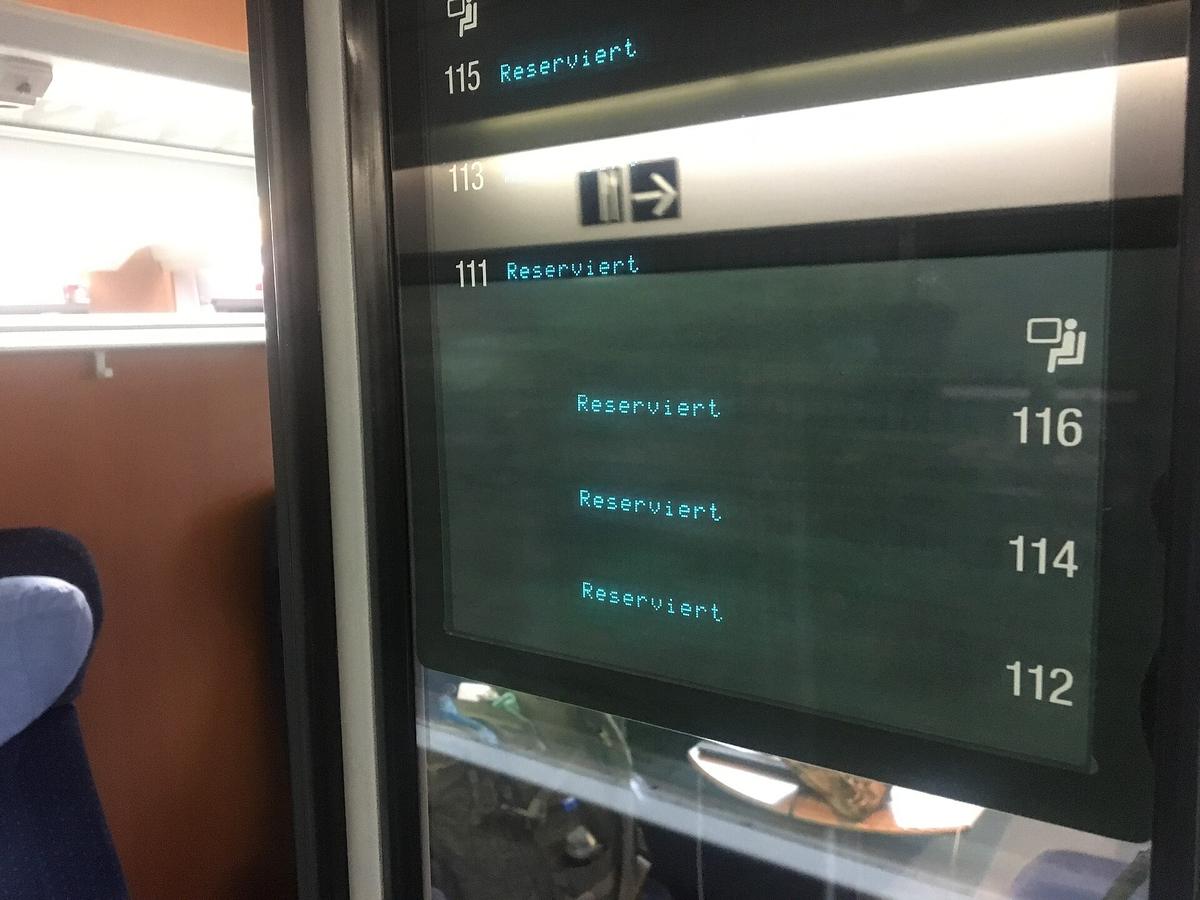
Deutsche Bahn marks unreserved seats with LED displays above each seat showing no reservation text or the phrase "ggf. reserviert" (may be reserved). Empty seats are free until someone with a reservation claims them. If you want a reservation for peace of mind on a busy Frankfurt to Berlin lunchtime train, the fee in 2025 was 4.90 euros through the DB Navigator app or a DB Reisezentrum counter. That is half the price of a coffee at the platform kiosk.
Austria: ÖBB Railjet
Railjet trains have small digital displays above each seat. Unreserved seats show no text. Domestic routes require no reservation. Some international routes, especially those crossing into Italy, make reservations compulsory. Check the specific train on the ÖBB app before boarding. The optional reservation fee in 2025 was 3.50 euros.
Switzerland: SBB
No domestic Swiss train requires a reservation, including the InterCity and InterRegio services that cross the country in three hours. Panoramic trains such as the Glacier Express and Bernina Express do require reservations, but those are scenic tourist trains, not transport. The Glacier Express reservation fee is 33 to 49 Swiss francs depending on season, booked through SBB.ch.
Netherlands: NS
No domestic Intercity or Sprinter service in the Netherlands requires a reservation. You board, you sit, you ride. The only Dutch train that requires a reservation is the international service to London and the high-speed service to Paris and Brussels.
Zone Three is reservation impossible territory. Regional trains in Belgium, Luxembourg, Czech Republic (non-SuperCity trains), Poland (non-EIP trains), and most Balkan routes do not offer reservations at all. You buy a ticket or activate your pass, board any car, and sit anywhere. These trains are slower, cheaper and less crowded. They also run less frequently. The trade-off is waiting an hour or two for the next departure if you miss one.
| Country | Service Type | Reservation Required | Pass Holder Fee (2025) | Booking Channel From Abroad |
|---|---|---|---|---|
| France | TGV InOui / OUIGO | Yes | 10-20 EUR (2nd), 15-30 EUR (1st) | SNCF Connect, Rail Europe, Eurail Portal |
| Spain | AVE / Avlo / Alvia / Intercity | Yes | 10-15 EUR (Turista) | Rail Europe, Eurail Portal (avoid Renfe.com) |
| Italy | Frecciarossa / Italo | Yes | 10 EUR (2nd) | Trenitalia.com, Italotreno.it, Rail Europe |
| Eurostar | London-Paris / London-Brussels | Yes | 30 EUR (Std), 38 EUR (Std Premier) | Eurostar.com, Eurail Portal |
| Germany | ICE / IC | Optional | 4.90 EUR (2nd) | DB Navigator, bahn.de, Eurail Portal |
| Austria | ÖBB Railjet (domestic) | Optional | 3.50 EUR | ÖBB app, Eurail Portal |
| Austria | ÖBB Railjet (to Italy) | Compulsory | 3.50 EUR | ÖBB app, Eurail Portal |
| Switzerland | SBB IC/IR (domestic) | No | N/A | N/A |
| Netherlands | NS Intercity / Sprinter | No | N/A | N/A |
| Belgium | Domestic IC | No | N/A | N/A |
| Czech Republic | Non-SuperCity | No | N/A | N/A |
How to Book Reservations for Pass Holders
If you hold a Eurail or Interrail pass, reservations are separate purchases that cost between 3.50 and 38 euros per seat depending on the train and class. The fees are set annually by each operator, not by Eurail. The 2025 rates are listed in the table above; Eurail B.V. publishes the quota figures annually, but individual operators set the fees. Book through the Eurail Reservation Portal for a unified interface, but check that the fee shown matches the operator's published rate. On TGV and cross-Channel routes, the portal may quote higher fees than booking directly with SNCF or the operator. Compare before you pay. The failure case is paying extra through a third-party intermediary that adds a booking fee on top of the reservation fee.

The Single Thing That Goes Wrong Most Often
The most common failure is this. A traveller buys a Eurail pass for a two-week trip through France, Spain and Germany, assumes the pass covers everything, boards a TGV from Paris to Barcelona without a reservation, and faces a penalty from the conductor plus a forced purchase of a full-fare ticket at the on-board rate. That mistake costs more than the pass itself. The rule is simple: if the train says TGV, AVE, Frecciarossa or Eurostar, you need a reservation before you step onto the platform. If the train says ICE, Railjet or SBB InterCity, you do not. Learn the name of the train, not the destination.
Read next
-
 Belgium
's rail network is compact but its ticket rules catch visitors out. Here's how SNCB fares, station choices and weekend deals actually work.
Belgium
Belgium's rail network is compact but its ticket rules catch visitors out. Here's how SNCB fares, station choices and weekend deals actually work.
-
 Spain
Spain's AVE network is fast but leaves entire regions on older Iberian-gauge rails. Explore the conventional lines, from the FEVE coastal route to the Ronda railway, that the high-speed map ignores.
Spain
Spain's AVE network is fast but leaves entire regions on older Iberian-gauge rails. Explore the conventional lines, from the FEVE coastal route to the Ronda railway, that the high-speed map ignores.
-
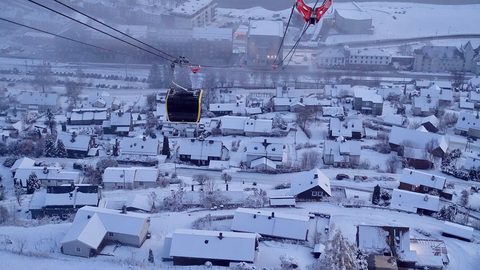
 Norway
 has four main rail corridors, not a sprawling network. Compare the Bergen, Dovre, Nordland, and Sørland lines to decide which one fits your limited time and scenic priorities.
Norway
Norway has four main rail corridors, not a sprawling network. Compare the Bergen, Dovre, Nordland, and Sørland lines to decide which one fits your limited time and scenic priorities.
-
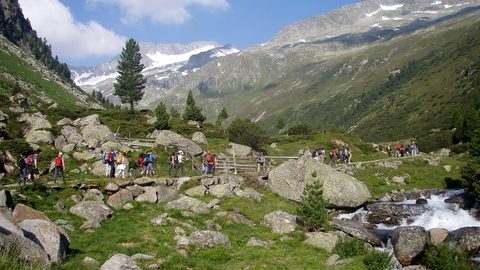
 Austria
's railways unite Alpine pass routes with Europe's densest night train network. Understand how the Arlberg line and Wien Hauptbahnhof sleeper hub connect mountain valleys to distant capitals.
Austria
Austria's railways unite Alpine pass routes with Europe's densest night train network. Understand how the Arlberg line and Wien Hauptbahnhof sleeper hub connect mountain valleys to distant capitals.
-
 Portugal
's rail network splits into three distinct experiences: the scenic Douro line, the coastal Algarve route, and the slow Alentejo interior. Choose the corridor that fits your travel temperament.
Portugal
Portugal's rail network splits into three distinct experiences: the scenic Douro line, the coastal Algarve route, and the slow Alentejo interior. Choose the corridor that fits your travel temperament.
-
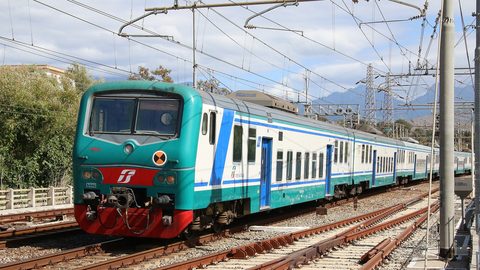
 Italy
Italy's rail network is more than the Frecciarossa spine. Discover the regional branch lines that climb through the Apennines and hug the Sicilian coast, and why they are worth the slower pace.
Italy
Italy's rail network is more than the Frecciarossa spine. Discover the regional branch lines that climb through the Apennines and hug the Sicilian coast, and why they are worth the slower pace.
-
 European Train Delays Your Rights and How to Claim Compensation
European rail passenger rights guarantee compensation for delays over an hour but claiming it requires knowing each operator's process. The forms, deadlines, and the HOTNAT rule explained.
European Train Delays Your Rights and How to Claim Compensation
European rail passenger rights guarantee compensation for delays over an hour but claiming it requires knowing each operator's process. The forms, deadlines, and the HOTNAT rule explained.
-
 Luggage and Bikes on European Trains Rules and Realities
European trains rarely weigh your luggage but overhead racks are tiny and bike rules vary wildly by operator. What you can bring, where it goes, and what gets you fined.
Luggage and Bikes on European Trains Rules and Realities
European trains rarely weigh your luggage but overhead racks are tiny and bike rules vary wildly by operator. What you can bring, where it goes, and what gets you fined.
-
 Train or Plane in Europe The Door to Door Arithmetic
A 90-minute flight looks faster than a four-hour train until you add airport transfers, security, and baggage reclaim. The door-to-door arithmetic for key European city pairs.
Train or Plane in Europe The Door to Door Arithmetic
A 90-minute flight looks faster than a four-hour train until you add airport transfers, security, and baggage reclaim. The door-to-door arithmetic for key European city pairs.