Riding the Bernina Line From Chur Without Paying the Full Panoramic Supplement
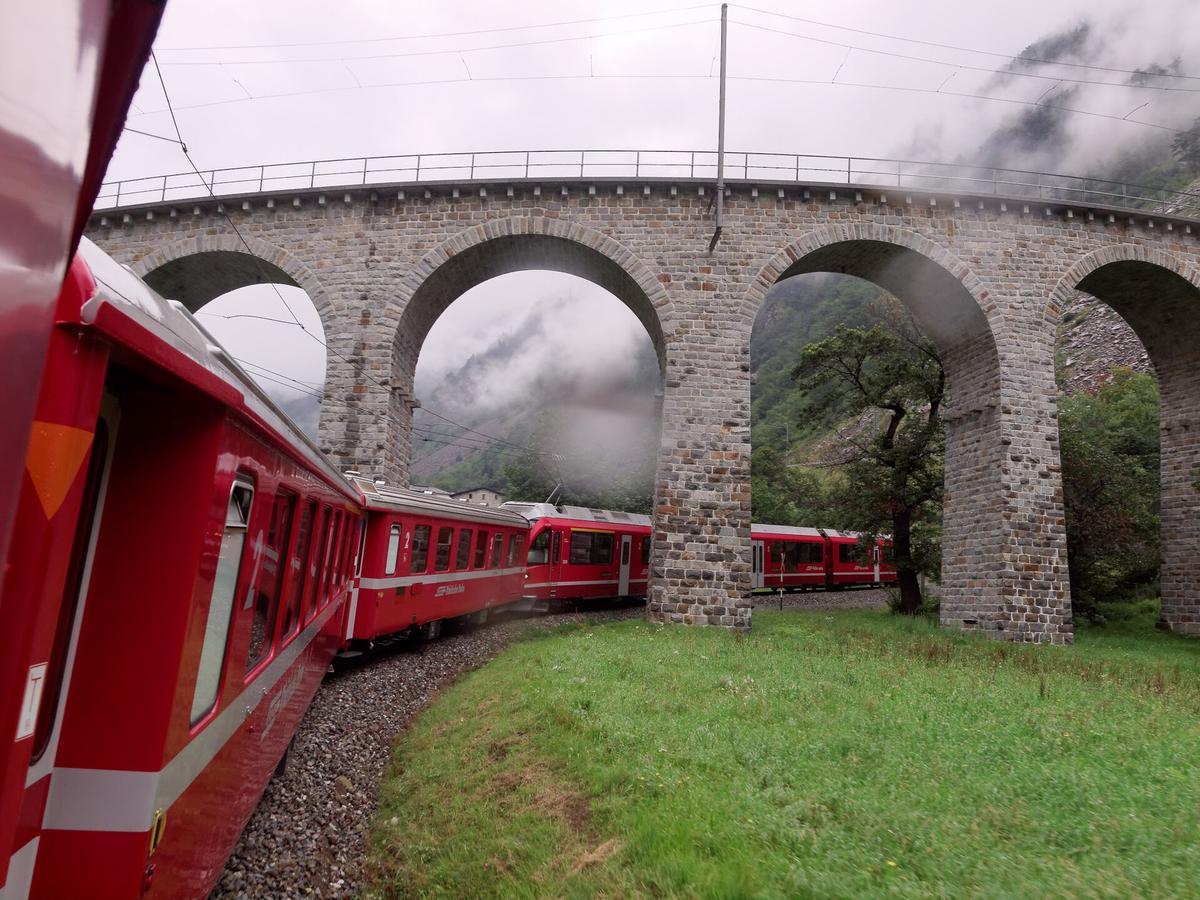
Riding the Bernina Line from Chur Without Paying the Full Panoramic Supplement
The Bernina Express panoramic train costs an extra CHF 14 to CHF 16 per seat in 2026 on top of the regular fare, and you must reserve that seat. The local RhB stopping train runs the same 144 kilometre track from Chur to Tirano, charges the same base fare of CHF 63 for second class, and requires no surcharge and no reservation. If your goal is the view across the Bernina Line rather than the branded carriage, ride the identical UNESCO listed route for the base fare alone.
Both trains share the same tracks, the same maximum gradient of 7 percent, and the same highest point at Ospizio Bernina, 2,253 metres above sea level. The Rhaetian Railway in the Albula / Bernina Landscapes earned UNESCO inscription in 2008 under reference 1276. The entire route from Chur south to Tirano crosses both the Albula section and the Bernina section. The difference is not the scenery. It is the carriage, the crowd, and the cost.
The Panoramic Train vs the Local Train: What CHF 16 Gets You
Sealed Windows Or Open Air
The CHF 14 to CHF 16 surcharge on the Bernina Express buys you a guaranteed seat in a carriage with sealed panoramic windows that curve into the roof. Those windows are the main reason visitors choose the panoramic train. They eliminate the frame of a standard window and give a wider angle on the valley. But they are sealed. You cannot open them. On sunny days the glass creates glare and reflections that defeat the camera phone you planned to shoot through. The local train carriages have standard windows that you pull down. Stick your arm out, shoot clean photos without glass distortion, and feel the cold alpine air at 2,253 metres.
Time, Stops And What You Give Up
The local train runs hourly between St Moritz and Tirano in 2026. From Chur the journey takes roughly 5 hours with a change. The Bernina Express covers the same Chur to Tirano distance in about 4 hours 20 minutes. The 40 minute difference comes from fewer stops. The Bernina Express makes limited stops. The local train stops at every station. Choose the panoramic service if you value a quiet carriage with assigned seating and want to minimise time in transit. Choose the local train if you want to step out at intermediate stations, photograph without reflections, and save CHF 16 per person.
Which Side to Sit on and Where to Get Off
Pick The Right Side
Sit on the right hand side in the direction of travel for both sections. That advice holds for the Chur to St Moritz leg, which covers the Albula line, and for the St Moritz to Tirano leg, which covers the Bernina line. On the Albula section the right side puts you opposite the Landwasser Viaduct, 136 metres long and 65 metres high with a 100 metre radius curve. On the Bernina section the right side gives the better view of the Brusio spiral viaduct, 110 metres long with a 70 metre radius and a 7 percent gradient.
Get Off At Alp Grüm
Alp Grüm is the stop to plan for regardless of which train you take. It sits on the Bernina line at roughly 2,091 metres. Step off the train directly onto a platform with a view down the valley toward Lago Bianco and the Morteratsch Glacier. The RhB local train stops here. The Bernina Express also stops here, though not every departure. Check the 2026 timetable for your specific train. If you are on the local train, get out, walk the short path along the ridge, and catch the next hourly service south to Tirano or north back to St Moritz. That flexibility is the real advantage of the local service.


The Failure Case and the Honest Caveat
When The Panoramic Train Sells Out
The failure case is a sold out Bernina Express during the peak summer months of June through August, when up to four departures per direction run daily but fill weeks ahead. If you arrive in Chur without a reservation for the panoramic train and find no seats available, the local train is not a consolation prize. It is the same route. Buy a CHF 63 second class ticket at the RhB counter, board the next hourly service to St Moritz, change there onto the local train to Tirano, and you see every metre of the same UNESCO listed line. The ride takes longer and you share the carriage with local passengers carrying skis and groceries, but the windows open and the views are not different.
Don't Mix The Two Systems
One thing goes wrong more often than any other. Visitors board the Bernina Express believing the surcharge guarantees a seat on a named train and then attempt to break the journey at Alp Grüm or Brusio, only to find the next Bernina Express is two hours later and also booked out. The local train runs hourly. If you plan to stop, take the local train. If you want the assigned seat and the panoramic roof, stay on the panoramic train the entire 4 hours 20 minutes. Mixing the two systems on the same day requires reading the timetable closely. The RhB publishes separate timetables for winter, mid December to mid May, and summer, mid May to mid December. Check the 2026 summer timetable online before you buy anything.
The Bernina Line is not a theme park ride. It is a working railway that connects the Swiss Grisons to the Italian Valtellina. The panoramic surcharge buys a specific carriage, not a better view. If you pay the surcharge expecting the Alps to look more spectacular through curved glass than through an open window, you will be disappointed. The mountains do not change. The carriage does.
Read next
-

 Swiss Rail and the Timetable That Actually Works Every Time
Switzerland’s rail network runs on a clockface timetable where connections are guaranteed. Compare the Swiss Travel Pass and Half Fare Card, and learn how the system works.
Swiss Rail and the Timetable That Actually Works Every Time
Switzerland’s rail network runs on a clockface timetable where connections are guaranteed. Compare the Swiss Travel Pass and Half Fare Card, and learn how the system works.
-
 Chur
Chur is the only city where both the Glacier Express and Bernina Express routes begin. Here's why that matters for your Swiss rail itinerary.
Chur
Chur is the only city where both the Glacier Express and Bernina Express routes begin. Here's why that matters for your Swiss rail itinerary.
-
 Glacier Express Zermatt to St Moritz Is Eight Hours on the Slowest Express Train Worth It
-
 Planning a European Rail Trip Across Borders With Tickets and Mobile Data
Plan a cross-border European rail trip with clear advice on digital tickets, reservations, live departures, connections, and mobile data.
Planning a European Rail Trip Across Borders With Tickets and Mobile Data
Plan a cross-border European rail trip with clear advice on digital tickets, reservations, live departures, connections, and mobile data.