The Brussels to Leuven Train for a Half-Day Trip That Genuinely Fits Into a Morning
Brussels to Leuven by train is a 25-minute SNCB hop that delivers a compact half-day of Gothic architecture and Belgian beer without the time commitment of Bruges or Ghent.
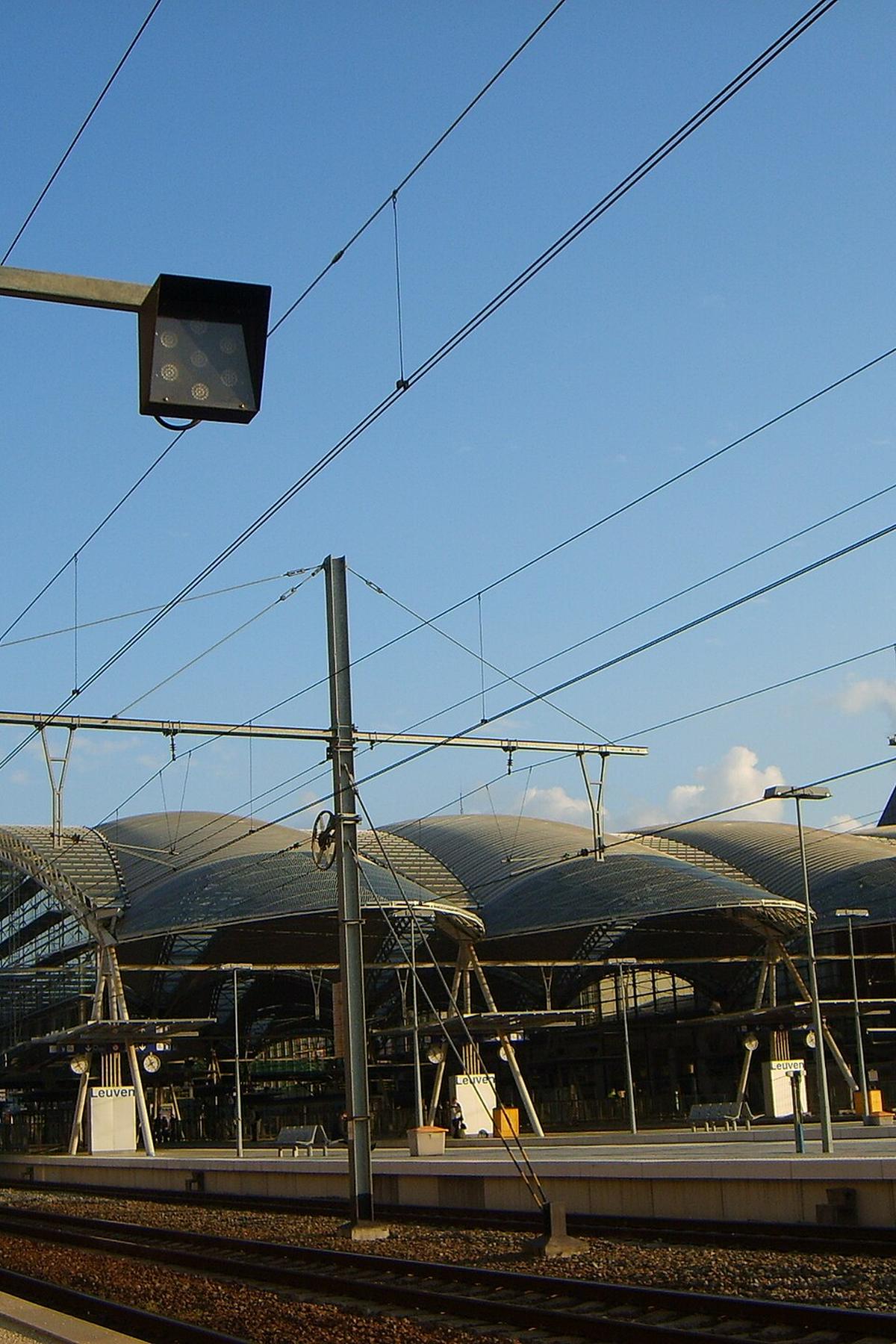

The Brussels to Leuven Train for a Half-Day Trip That Genuinely Fits Into a Morning
Brussels to Leuven by train is short enough for a genuine half-day if the station walk is planned.
The problem with most half-day trips is that they are not half-day trips. By the time you reach the platform, buy a ticket, sit through the ride, and walk to the centre, the morning is gone and you have to turn around immediately. The Brussels to Leuven run is the exception. The journey takes 23 to 26 minutes from Brussels Central to Leuven. That is shorter than the bus ride from your hotel to the Grand Place. Walk out of the arrival hall, follow the straight line down Martelarenplein and Bondgenotenlaan for 600 metres, and you are standing in the Grote Markt in under ten minutes. No tram, no taxi, no second guess. Leave Brussels Central at 09:00 and you can be ordering a coffee on the Oude Markt by 09:35.
Leuven Half-Day Trip: Why This One Works
Compact Core Without Compromises
A Leuven half-day trip does not force you to choose between the two main sights. The compact walkable core from the platform to the Grote Markt means you cover the Stadhuis and the University Library tower before lunch, then spend the afternoon at the Stella Artois brewery. That is the full loop. Bruges demands an hour each way on the train and another twenty minutes of walking from the stop to the canals. Ghent is faster than Bruges but still commits you to a full day if you want to see the altarpiece, the castle, and the Patershol. Leuven works as a spontaneous morning decision because the travel friction is low enough that the trip does not require a plan.
If you are based in Brussels and wondering what to do with a free morning, this is the answer. The train frequency makes it risk-free.
Frequency That Forgives
On a weekday, 4 to 7 trains run every hour from Brussels Central to Leuven. Saturday drops to 3 to 5 per hour. Sunday and holidays run 2 to 4 per hour. You never wait more than thirty minutes. The first direct weekday departure from Brussels Central is around 05:25. The last direct train back from Leuven on any night of the week is around 23:25. There is no night service, so plan your last beer accordingly.
Leuven Train from Brussels: What You Pay and How to Pay it
Fares and the Weekend Trick
The Leuven train from Brussels costs roughly €5.50 to €6.50 for a standard single fare. SNCB, the Belgian rail operator, prices by distance, and Leuven sits at the short end of the scale. The real saving comes from the weekend return fare, which knocks 40 to 50 percent off the price of two singles. Travelling on a Saturday or Sunday? Buy a weekend return at the machine or through the SNCB app. That single ticket price becomes irrelevant because the return costs only a few euros more than one way.
How to Pay Without the Surcharge
Payment at the stop matters. SNCB accepts contactless bank cards at the ticket gates and the vending machines, so you do not need cash. Paper tickets carry a surcharge of €1 to €2. Avoid them. Use the SNCB app or tap your contactless card directly on the validator. If you plan multiple train trips across Belgium, consider a MOBIB card, which stores travel products and avoids the surcharge entirely. For a single return trip to Leuven, the contactless card is the simplest method.
Under-26 travellers have a different calculation. The Go Pass 10 offers ten journeys at a fixed price of roughly €6.50 per journey when bought as a ten-journey pass. One journey from Brussels to Leuven uses one unit. If you intend to take a second day trip to Ghent or Antwerp during the same stay, the Go Pass 10 pays for itself.
SNCB Leuven Route: the Stations and What to Watch for
On the SNCB Leuven route, the departure point you want in Brussels is almost always Central. Brussels Midi is the Eurostar hub, but it sits a dull twenty-minute walk from the historic centre, and you have no reason to start or end there for this trip. Brussels Central drops you onto the direct line to Leuven. If you are staying near Schuman or the EU quarter, you can board there instead, but Central gives you the widest choice of frequencies.
The fast direct trains run 23 to 26 minutes. The all-stops local takes 35 to 40 minutes. The platform screen at Brussels Central shows the stopping pattern. See a train that calls at every stop between Brussels and Leuven? Let it pass and wait the few extra minutes for the next one. A 35-minute local still beats any bus, but the express trains shave off a full third of the time.
Leuven station itself is straightforward. The exit points straight onto Martelarenplein. Bondgenotenlaan runs directly ahead. About 600 metres and seven to ten minutes later, you reach the Grote Markt. The Stadhuis dominates the square. The University Library tower is a two-minute walk beyond it. The Stella Artois brewery entrance is on Vaartstraat, five minutes past the library. You can hit all three in a single morning loop without retracing your steps.
Leuven Stella Artois Brewery: the Anchor Experience
Book Before You Board
Leuven Stella Artois brewery is the operational parent of the global brand, and a tour here is the anchor that makes the half-day feel complete. The standard tour runs about ninety minutes and ends with a tasting in the on-site bar. Book the tour online in advance, especially on weekends. Walk-ins sometimes work on weekday mornings in low season, but the brewery caps group sizes and a sold-out slot leaves you with nothing else to anchor the afternoon.
The Walkable Loop in Sequence
The brewery tour sits at the end of the walkable loop. Start at the Grote Markt and the Stadhuis. Walk to the University Library tower. Then head to the brewery. The sequence means you see the old town before you drink, not after. If your Belgian beer education is limited to what you find in a supermarket, the tour fills the gaps: the water source, the yeast strain, the fact that Stella Artois was originally a Christmas beer called Stella. Those details matter more in Leuven than they do at a bar in Brussels because you are standing where the beer was made.
After the tour, the Oude Markt, the longest bar square in Europe, is a five-minute walk from the brewery. The square fills with students from KU Leuven in the evening, but at midday it is quiet and the terraces are open. A frites cone from a nearby frietkot with andalouse sauce costs a few euros and pairs better with a Belgian blonde than a restaurant meal would. The combination of the brewery tour, the square, and the frites is the moment the half-day trip earns its feeling of completeness.
What to Verify Before You Go
Engineering Works and Strikes
Four things can derail this trip. Engineering works on the SNCB network close lines on weekends and public holidays. Check the engineering works calendar at belgiantrain.be before you choose your date. Strikes happen in Belgium with little notice. Monitor SNCB official channels on the morning of travel. The real-time timetable in the SNCB app is more reliable than any printed schedule.
University Calendar and the Fallback
If you plan to visit during KU Leuven exam periods, the student population halves and the Oude Markt bars adjust their hours accordingly. The KU Leuven academic calendar is published at kuleuven.be/calendar. The 2026-2027 academic year runs on a semester system. First semester starts late September 2026, with exams in January 2027. Second semester starts early February 2027, with exams in June 2027. The Easter break is two weeks around April 2027.
If the train is not running, the fallback is the Leuven-Louvain-la-Neuve bus line, which connects the two university cities but takes longer and drops you at the far side of town. Do not rely on it for a half-day trip. If the train is cancelled, postpone the trip to the next available weekend.
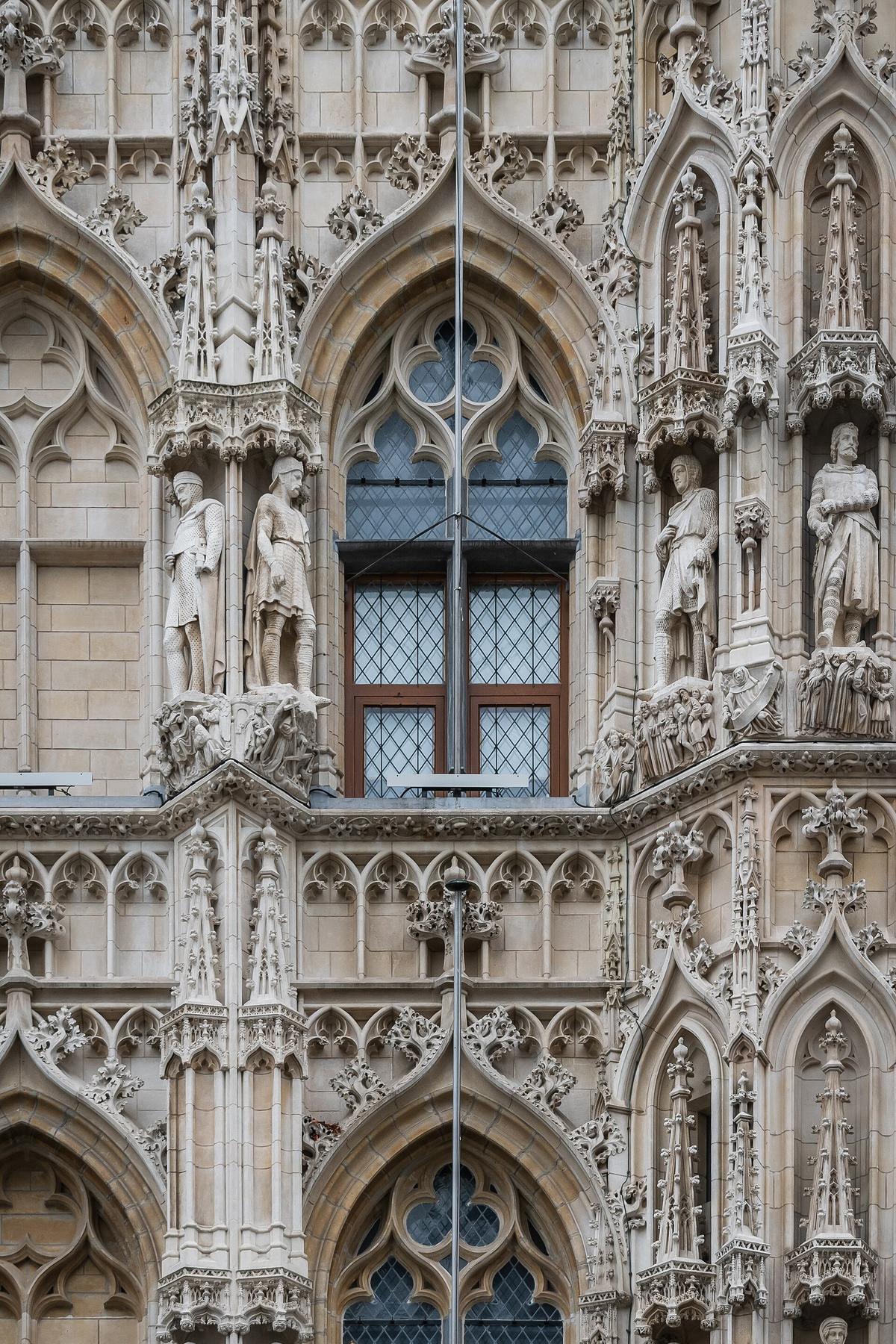

Why Leuven Beats Bruges and Ghent for a Morning
The comparison is not about quality. Bruges and Ghent are better destinations for a full day or an overnight. The question is whether a half-day trip to either city leaves you satisfied or frustrated. A morning in Bruges means you arrive at 10:00, queue for the Belfry, walk one canal, and eat a rushed lunch before the return train at 14:00. You miss the Sint-Anna quarter, you skip the Groeningemuseum, and you never sit in a brown café long enough to understand why people like the place. Ghent is tighter, but the Ghent Altarpiece at St Bavo's requires a mandatory timed ticket, and if you miss your slot, the whole morning collapses.
Leuven does not have a single attraction that demands a timed reservation. The Stadhuis is free to walk past and photograph. The University Library tower charges a small entry fee but never has a queue longer than ten people. The Stella Artois brewery sells timed entry, but the slots run every forty-five minutes, so missing one means waiting less than an hour. The failure case is forgiving. That is rare for a European city trip.
| Day | Trains Per Hour | Fastest Journey | Slowest Direct Journey |
|---|---|---|---|
| Weekday | 4-7 | 23-26 min | 35-40 min |
| Saturday | 3-5 | 23-26 min | 35-40 min |
| Sunday/Holiday | 2-4 | 23-26 min | 35-40 min |
The Failure Case You Need to Know
The single most common mistake on this trip is not the ticket or the timing. It is the return. The last direct train from Leuven to Brussels Central on any night of the week departs around 23:25. On Friday and Saturday night, that same time applies. There is no later service. Having a third beer on the Oude Markt at 23:00 and deciding to stay for one more means sleeping in Leuven. Hotels in Leuven run 20 to 40 percent cheaper than comparable categories in Brussels centre, so sleeping over is not the disaster it would be in Bruges. But if you planned a half-day trip, you planned to return. Watch the platform screen at Leuven station. When the 23:25 train departs, the next option is not until approximately 05:15 the next morning. That is a six-hour gap with no train and no night bus alternative. Set a 22:45 alarm on your phone. Leave the bar when it sounds.
Read next
-
 Belgium Trains Tickets Stations and the Rules That Catch Visitors
Belgium trains are frequent but the ticket rules, station layouts and payment quirks trip up even seasoned travellers. What to know before you tap or buy.
-
 Brussels
 has three main stations and picking the wrong one adds a dull 20-minute walk or a metro ride to your arrival. Here's how to choose.
-
 Brussels to Antwerp by Train the Easy Day Trip With One Station Worth Seeing
Brussels to Antwerp by train takes 45 minutes on SNCB, but Antwerp Central Station itself is the sight that makes the day trip worth it before you even step outside.
-
 Brussels to Ghent by Train Station Choice Matters at Both Ends
Ghent is 30 minutes from Brussels by SNCB train but the station you pick at both ends changes everything. Sint-Pieters vs Dampoort, fares and the tram connection.
-
 Brussels to Bruges by Train Without Buying a Tour
Bruges is an easy hour from Brussels by SNCB train and costs far less than a packaged tour. Here's the fare structure, station tips and what to know before you go.
-
 Brussels Airport by Train City Centre Other Belgian Cities and the Supplement
The train from Brussels Airport is fast and frequent but every ticket includes a Diabolo supplement that catches first-timers. Routes, fares and what to check.
-
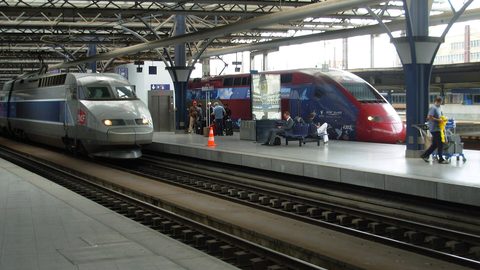 Eurostar at Brussels Midi Make the Onward Connection Without Guessing
The Eurostar pulls into Brussels Midi but your Belgian train leaves from a different part of the station. Here's the step-by-step connection without the stress.
-
 Which Brussels Station Midi Central Nord or Luxembourg
Midi is the international hub, Central is the one you actually want, Nord is the business district, and Luxembourg serves the EU quarter. Pick carefully.
-
 Planning a European Rail Trip Across Borders With Tickets and Mobile Data
Plan a cross-border European rail trip with clear advice on digital tickets, reservations, live departures, connections, and mobile data.