Taking a Bicycle on Belgian Trains With the SNCB Bike Ticket and Boarding Rules
Taking a bicycle on Belgian trains requires an SNCB bike ticket supplement, except for folding bikes which travel free, and peak-hour restrictions apply on most routes.

Taking a Bicycle on Belgian Trains with the SNCB Bike Ticket and Boarding Rules
You are on the platform at Brussels Central, bike beside you, as the 09:15 to Namur pulls in. The carriage door has a bicycle pictogram. You lift your bike aboard. Two hours later you climb out at Dinant with the Meuse Valley opening ahead, citadel above, saxophone bridge below. The whole ride cost you a flat supplement, set by SNCB, on top of your passenger fare. That supplement and the weekday peak ban are what catch most cyclists out.
Taking a bicycle on Belgian trains with SNCB is simple once you know the rules. The bike add-on is a flat-rate charge per single journey, valid for one trip with no time limit and no distance limit. Buy it before you get on, through the SNCB app, the website, a ticket machine, or the ticket office. No reservation is needed. The add-on alone grants you access. Season ticket holders travel with their bike at no extra charge. The same zero-rate applies if you start at Brussels Airport. The add-on is non-exchangeable and non-refundable, so buy it only when you are certain you are travelling.
SNCB Bike Ticket: What it Covers and Where to Buy
The SNCB bike ticket is a flat-rate add-on, separate from your passenger fare. For the 2026 fare year, SNCB sets it at a few euros per single journey. It covers any one journey, any distance, any departure time, subject to the weekday peak ban. Buy it at a ticket machine, at the ticket office, on the SNCB app, or on belgiantrain.be. You must purchase before you step onto the train. There is no way to buy it on board.
If you hold an SNCB season ticket or a MOBIB card, the bike add-on costs you nothing. The same zero charge applies if your journey starts at Brussels Airport and you hold the Airport Zone supplement. The add-on is valid for one journey only and cannot be exchanged or refunded. Do not buy it in advance for a future date you are unsure about.
Peak Hour Restrictions: the Rule That Catches Cyclists
On weekdays, no full-size bicycle is allowed on certain SNCB trains between 06:30 and 09:00, and again between 16:00 and 19:00. This applies even if you hold a valid bike add-on. SNCB publishes a list of restricted trains on its Bike on the train page as a PDF, organised by timetable number, departure station, and time. The list updates every timetable period. Check it before you travel.
The ban applies to all full-size bicycles. A folding bike that meets SNCB's definition is exempt. If you try to get on a restricted peak service with a full-size bike, the conductor can refuse you. There is no appeal and no refund on the add-on. The weekday peak ban does not apply on weekends or public holidays.
How the Peak Ban Affects Ardennes Routes
On the Ardennes and Meuse Valley corridors, where combining rail and cycling unlocks Dinant and Namur, the peak ban matters most on Friday evenings and Monday mornings. SNCB operates all its standard trains on these routes, including the peak-restricted services. Bike capacity pressure on these lines is high on weekends between April and October. No reservation is possible. If you arrive at Liège Guillemins or Namur with a full-size bike on a peak-hour weekday, you will likely have to wait for the next off-peak service.
Bike on Train Belgium: Boarding, Carriage Spaces, and Platform Access
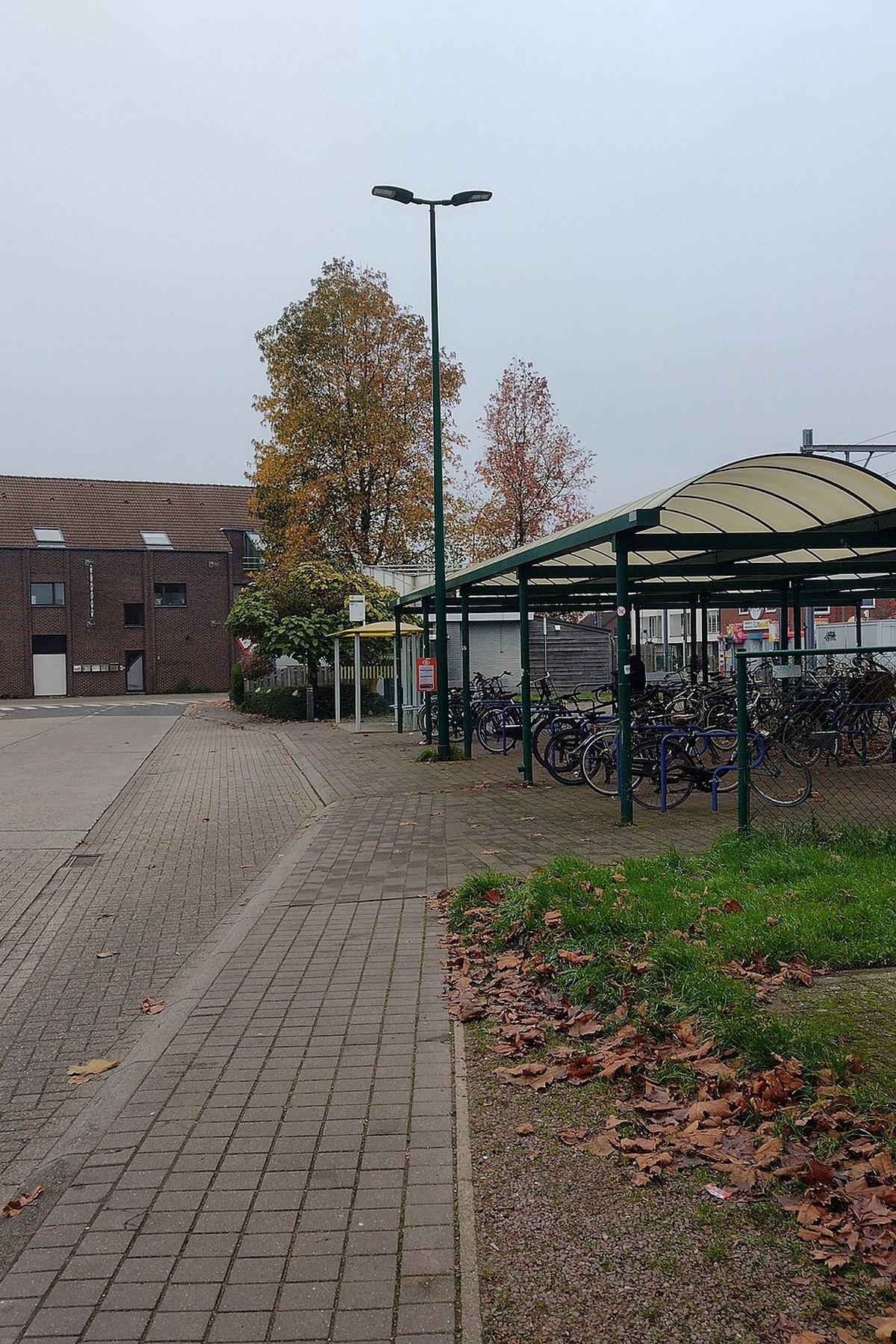
Get on through the carriage door marked with a bicycle pictogram. SNCB's double-decker M7 and M6 carriages each have two bike spaces in the multifunctional area. Desiro ML units have two to four spaces depending on configuration. Older AM08 and AM80 units have two spaces. I11 carriages also have two. The spaces are hooks or floor stands, not dedicated bike compartments. On older rolling stock, the hooks are limited and may not secure your bike well. You can use the multifunctional area but you must not block aisles or doors.
Platform access varies. Station lift availability is not guaranteed at every stop. Check the SNCB station page for lift status icons at your departure, interchange, and arrival stations before you travel. Some smaller stations on the Ardennes lines, like Dinant and Namur, have lifts but they can be out of service. If a lift is broken and you cannot carry your bike up stairs, you may be stuck. SNCB does not offer an alternative service.
Pre-Travel Checks
Before you go, verify five things. One: lift and escalator status at every station on your route, on the SNCB station pages. Two: the peak train restriction list for your travel date on the SNCB Bike on the train page. Three: engineering works affecting train composition, which can reduce bike spaces, on the SNCB works calendar. Four: real-time occupancy via the SNCB app, where available, to anticipate denied boarding. Five: that your bike add-on is purchased and active on the app or on your paper ticket before you step onto the platform.
Belgium Train Bicycle Rules: Full Size vs Folding
The core rule is simple: a full-size bicycle needs the flat-rate add-on and is banned on peak-hour weekday trains. A folding bike, when folded, travels free and is exempt from the peak ban. The SNCB definition of a folding bike is wheels no larger than 20 inches and folded dimensions no bigger than 120 by 80 by 50 centimetres. It must be folded before you get on and stowed in luggage areas, not blocking aisles or doors. Carried as hand luggage, it requires no add-on and no ticket.
If your bike does not fold to those dimensions or has wheels larger than 20 inches, it is a bicycle. Buy the add-on and obey the peak ban. There is no grey area. SNCB conductors are strict about this. A bike that looks foldable but exceeds the size limit will be treated as a full-size bike.
Folding Bike SNCB: When You Skip the Add-on Entirely
A folding bike that meets the SNCB definition travels for free. No add-on. No time restriction. You can carry it on any train, any day, any time, including peak-hour services where full-size bikes are banned. You fold it before you step onto the platform, carry it aboard, and stow it in the luggage area. The same rule applies on the coastal route, Line 0 from Oostende to Knoke, Blankenberge, or De Pane, and on the Ardennes routes.
This is the single biggest advantage a folding bike gives you on Belgian trains. You skip the add-on cost, you skip the peak-hour ban, and you skip the uncertainty of finding a bike space on a busy carriage. If you are planning a weekend trip from Brussels to Dinant or Namur in the high season of April to October, a folding bike is the smarter choice. The bike capacity pressure on those weekend trains is high and no reservation is possible. With a folded bike, you are not competing for a hook.

The Ardennes and Meuse Valley: Where the Bike Policy Matters Most
The strongest reason to take a bicycle on Belgian trains is the Ardennes and Meuse Valley corridor. The train from Brussels Central to Namur is a direct SNCB service. From Namur to Dinant is another short ride. The Meuse Valley route runs through river-carved citadels, with the saxophone bridge in Dinant and the citadel above it. SNCB operates all standard trains on these lines, including the peak-restricted services on weekdays. On weekends, the off-peak trains run all day and the add-on is valid without restriction.
The bike capacity pressure on weekend trains in this corridor is high between April and October. No reservation is possible. Arrive early at the platform. If the bike carriage is full, you may have to wait for the next service. The same applies on the coastal route on sunny weekends. SNCB does not guarantee bike space on any service.
Practical Details: Ticket Machines, the SNCB App, and the Coastal Route
At the station, use a ticket machine or the ticket office to buy the bike add-on. The machine accepts contactless bank cards. Paper tickets from a machine or office carry a small surcharge over mobile tickets. The SNCB app lets you buy the add-on in advance and display it on your phone. No printing is needed.
The coastal route, Line 0 from Oostende to Knoke, Blankenberge, and De Pane, uses the same flat-rate bike add-on and the same weekday peak ban. The pressure on bike capacity on this route is high on sunny weekends and public holidays. No reservation is possible. If you are travelling to the coast with a bike, go early in the morning or late in the afternoon on a weekday if you can. On a summer weekend, expect the bike carriage to fill by the second stop.
The same peak restriction list that applies to the Ardennes routes applies to the coastal route. Check the PDF on the SNCB Bike on the train page before you go. The timetable validity period runs from the second Sunday of December each year, when SNCB publishes its annual timetable change. The restriction list updates at that point.
| Carriage Type | Bike Spaces |
|---|---|
| M7 double decker | 2 (multifunctional area) |
| M6 double decker | 2 (multifunctional area) |
| Desiro ML multiple unit | 2-4 (varies) |
| AM08/AM80 multiple unit | 2 (multifunctional area) |
| I11 carriage | 2 (multifunctional area) |
The single most practical thing you can do is check the SNCB Bike on the train page for the peak restriction list and the lift status at your stations before you buy your ticket. The restriction list is a PDF, updated with the timetable period. The lift status is on the station pages. If you ignore both, you will arrive at a station with broken lifts and a blocked peak service, and you will miss your train.
Read next
-
 Belgium Trains Tickets Stations and the Rules That Catch Visitors
Belgium trains are frequent but the ticket rules, station layouts and payment quirks trip up even seasoned travellers. What to know before you tap or buy.
-
 Belgian Train Delays What Happens to the Connection and the Ticket
Belgian train delays on SNCB do not invalidate your ticket for the next service, but compensation depends on the delay length and whether a cross-border operator is involved.
-
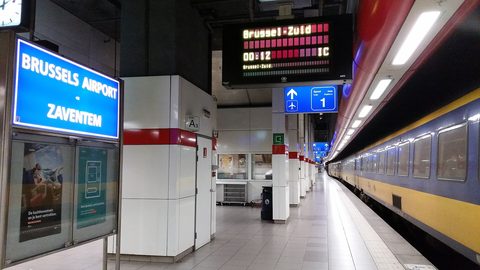 Belgium Cross Border Trains to London Paris Amsterdam Cologne and Luxembourg
Belgium cross border trains run from Brussels Midi on Eurostar, TGV, ICE, and SNCB InterCity routes, each with different operators, booking windows, and check-in rules.
-
 Belgian Train Tickets Standard Weekend and Multi Journey Products Explained
Belgian train tickets from SNCB range from standard singles to weekend returns and multi-journey passes, and the right product depends entirely on how many cities you are visiting.
-
 Planning a European Rail Trip Across Borders With Tickets and Mobile Data
Plan a cross-border European rail trip with clear advice on digital tickets, reservations, live departures, connections, and mobile data.